Is Renting Cheaper Than Buying in Las Vegas Right Now?
Here is the short, honest answer: right now, month to month, renting a home in Las Vegas is cheaper than buying the median house. The median completed lease in Southern Nevada ran about $2,000 a month in September 2026, while carrying the median $470,000 single-family home at today's mortgage rates costs roughly $2,900 to $3,600 a month all-in, depending on your down payment. But that comparison is only half the story, because buying builds equity and renting does not. This article lays out both halves of the math in plain English, so you can decide which one matters more in your situation instead of trusting a headline.
Quick Takeaways
- The median completed lease in Southern Nevada was about $2,000 a month in September 2026, down $45 from August, per Las Vegas Realtors rental data.
- The median single-family home sold for $470,000 in September 2026, flat year over year, and the median condo sold for $290,000.
- At a 7.32% 30-year rate, the median house costs about $2,900 to $3,600 a month all-in, or $900 to $1,600 more than the median rent.
- The gap nearly disappears on the median condo: about $2,150 a month to buy against $2,000 to rent.
- Published breakeven estimates range from roughly 4 to 5 years to 7 to 13 years, and the number depends on assumptions you control.
What the rent numbers actually say right now
Start with the number that measures actual signed leases. In its residential rental report for September 2026, Las Vegas Realtors put the median price of a completed lease in Southern Nevada at $2,000 a month, down $45 from August and up just 0.3% from a year earlier. Rents are not spiking in Las Vegas right now. They have been basically flat, and by some measures they are easing.
Different sources measure different things, so do not get tripped up by the range. Zillow's metro rent index for the Las Vegas area sat near $1,742 in August 2026, essentially unchanged from a year earlier. Apartment List's city-level median was around $1,328 in October 2026, down about 3.6% year over year, because a median across all unit sizes skews toward smaller apartments. A two- or three-bedroom house or a newer complex rents for meaningfully more than the overall median. The number that matters for the rent-versus-buy question is what the kind of home you actually want rents for, and in Las Vegas the honest range for a comfortable two-bedroom-plus rental is roughly $1,600 to $2,400 a month depending on location, age and size.
What the buy numbers say right now
On the buy side, the Las Vegas Realtors report for September 2026 showed the median existing single-family home sold through the local MLS at $470,000, down 1.1% from August's $475,000, flat year over year, and about $20,000 below the record $490,000 reached in May and June. The median condo or townhome sold for $290,000, down 1.4% from a year earlier. Prices have not crashed, but the spring record is in the rearview mirror and the market is measurably cooler than it was.
The rate is the other half of the payment, and it is the reason this question is getting asked. The 30-year fixed-rate mortgage averaged 7.32% for the week ending October 22, 2026, according to Freddie Mac's Primary Mortgage Market Survey, after touching 7.40% earlier in October. That is up sharply from the start of the year: rates opened 2026 near 6.15% and hit a three-year low of about 6.06% in mid-January before climbing through the year. At 6.1% the median house cost noticeably less per month than it does at 7.3%, and that difference is exactly why "should I rent or buy?" feels different now than it did in January.
The monthly comparison, side by side
Here is the apples-to-apples monthly picture built on the current numbers: the September 2026 median prices, a 7.32% 30-year rate, property taxes around 0.55% of value (the commonly cited Clark County effective rate), homeowners insurance around $1,380 a year, and loan insurance included where the down payment is below 20%. These are estimates, not quotes, and they match the payment math I walk buyers through at this price level.
| Option | Key numbers | Est. monthly cost |
|---|---|---|
| Rent, median lease | Southern Nevada, Sept 2026 | ~$2,000 |
| Buy, median house | $470,000, 20% down | ~$2,900 |
| Buy, median house | $470,000, 10% down | ~$3,400 |
| Buy, median house | $470,000, 3.5% down (FHA) | ~$3,600 |
| Buy, median condo | $290,000, 10% down | ~$2,150 |
Estimates as of October 2026 at a 7.32% rate on September 2026 median prices. Rent is the median completed lease; buy estimates include taxes, insurance and loan insurance where applicable. Not included on either side: maintenance, repairs, equity, HOA dues or the opportunity cost of a down payment.
Read it straight: buying the median house costs roughly $900 to $1,600 more a month than the median rent right now, and published 2026 analyses land in the same neighborhood, with one putting the gap for a comparable three-bedroom at about $1,400 a month. But look at the bottom row. On the median condo the gap nearly disappears: about $2,150 a month to buy against $2,000 a month to rent, a little more than the price of a nice dinner. That is the most useful fact on this table, and the one most rent-versus-buy headlines leave out.
The part of the math that is not on the bill
Stop the comparison at monthly cash flow and renting looks like the obvious answer. But a mortgage payment is not an expense the way rent is. Part of each payment comes back to you as equity, and in the early years of a loan, even at these rates, a meaningful share of the payment goes to principal. The rest buys real things rent cannot: a fixed payment locked in for 30 years, the right to stay as long as you want, freedom from landlord rules, and any appreciation, which in Las Vegas has historically been real over long holding periods.
The honest counterweight is that owners pay for things renters never see. When the water heater dies or the roof ages, that is the owner's bill. Property taxes and insurance go up over time, and an HOA is a monthly line item in most Las Vegas communities, from $75 to $250 a month in master-planned neighborhoods and much more in high-rise condos. Renting trades those risks for a higher monthly payment ceiling over the long run. The question is not whether owners have costs, it is whether the equity and control they get in exchange outweigh the costs, and that is a question about time horizon.
The breakeven question, honestly
How long do you need to own before buying wins? Ask five analyses and you get five answers, because the number is built from assumptions. One 2026 analysis of the Las Vegas market put the breakeven at roughly 4 to 5 years, while another, using a lower down payment and today's rates, estimated 7 to 13 years. A June 2026 Zillow analysis covered by the Las Vegas Review-Journal concluded that buying still makes more financial sense in the valley over the long term. They are not contradicting each other; they are answering for different buyers.
What pushes the breakeven out are the things working against buyers right now: rates near 7.3% instead of the 6.1% they hit in January, prices still at record-adjacent levels, and slower appreciation than the valley saw for years. What pulls it back in are a bigger down payment, a condo price point close to rent, a long stay, and the fact that rents here have not been dropping the way purchase prices eased. My rule of thumb has not changed in 36 years: if you expect to stay in the home at least five to seven years, and ideally longer, buying deserves a serious look. If your next chapter is genuinely uncertain, renting is not a cop-out, it is a hedge, and it is the right hedge more often than people admit.
When renting is the right call
Let me name the situations where the honest answer is to keep renting, because in my experience too few agents will. If you might move for a job, family or lifestyle within a couple of years, renting protects you from transaction costs you will not have time to outrun. If you are still building the down payment and an emergency fund, buying with every dollar committed is how small surprises become big ones. If your income is new or irregular, a year of clean rent history and stable employment is often the difference between a pre-approval you can count on and one you cannot. And if rates at 7.3% make the payment genuinely uncomfortable, no appreciation story makes up for being house-poor in year two.
There is nothing wrong with any of those answers. The mistake is renting by default for years while the down payment quietly gets spent on other things, or buying by default because a landlord raised the rent once. Both moves should be decisions, not reflexes.
When buying is the right call
Buying wins when the math has time to work. If you plan to be in Las Vegas five or more years, have a down payment that leaves a cushion, and the monthly payment on the home you actually want fits your budget at today's rates, the equity clock starts working for you. The condo route is the sleeper play right now: buying the median condo costs within roughly $150 a month of renting one, with mortgage payments under $2,200, and in a valley where rents stay flat, that gap is the cheapest entry into ownership Las Vegas has offered in years.
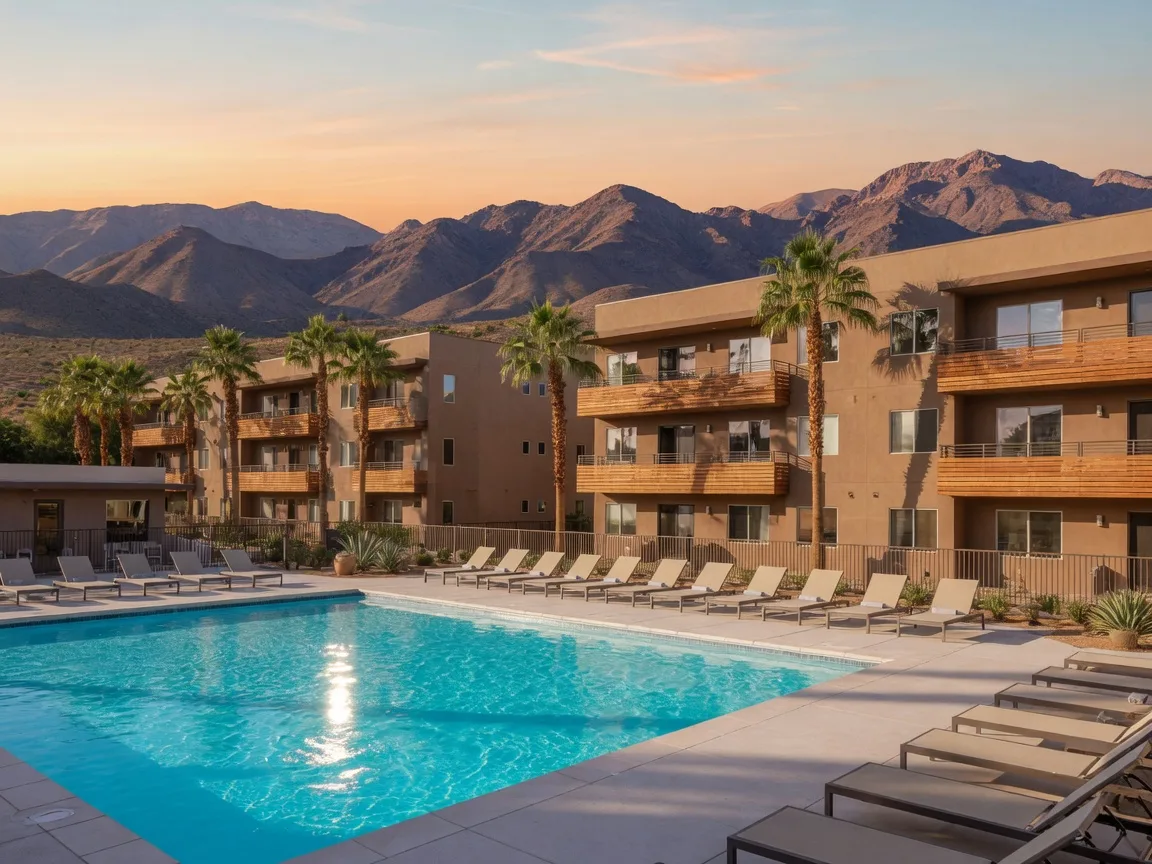
The same logic applies to 55+ and active-adult communities, where condominium and townhome product is common and the monthly gap versus renting an equivalent unit is narrow. For a buyer with a time horizon, the calculation is not whether renting is cheaper this month, it is whether you want the payment and the equity, or the rent and the flexibility. One hedges your future, the other builds it. Which one fits depends on you, and you are the only person who can answer it.
What buyers are walking into right now
One more piece of the picture. For all the headlines about rates, the Las Vegas market has shifted in ways that favor buyers who are ready. Active single-family listings without an accepted offer totaled about 7,995 at the end of September, up 6.6% year over year, and condo listings without offers rose 7.3%. Sales are slower, the median price is flat year over year, and prices came off the spring record. In practical terms, sellers are more willing to talk about price, closing assistance, rate buydowns and repairs than they were eighteen months ago, and a competent buyer's agent can use all of it to shrink the buy-versus-rent gap on the exact property you want.
New construction is part of the story too. Builders in Southern Nevada have been using incentives to keep sales moving in the slower market, and builder financing offers can shave the rate enough to change this entire calculation. Those offers come with fine print, so they are worth having a professional read before you sign. And as always, the difference between what a home is listed at and what it is actually worth is where an agent with appraisal experience earns their keep, which is a subject I care about personally: I was a licensed residential appraiser for more than 15 years. I no longer actively appraise, but I always think like an appraiser.
The Renting vs Buying Question, Answered
Q: Is renting cheaper than buying in Las Vegas right now?
A: Month to month, yes: the median completed lease runs about $2,000 a month, while buying the median $470,000 house at 7.3% costs roughly $2,900 to $3,600 a month all-in. On the median $290,000 condo, buying at about $2,150 a month lands close to rent. Renting wins cash flow; buying wins equity, so the right answer depends on how long you stay.
Q: How much does it cost to rent in Las Vegas in 2026?
A: The median completed lease in Southern Nevada was about $2,000 in September 2026, per Las Vegas Realtors data, down $45 from August. Zillow's metro index sat near $1,742, flat year over year. The number for the home you want, especially a two-bedroom-plus, runs higher than the overall median.
Q: What is the monthly payment on the median Las Vegas home?
A: At a 7.32% rate on the $470,000 median house: about $2,900 a month with 20% down, $3,400 with 10% down, and roughly $3,600 on an FHA loan at 3.5% down, including taxes, insurance and loan insurance. The median $290,000 condo runs about $2,150 with 10% down.
Q: How long do you need to own for buying to beat renting?
A: Published estimates range from roughly 4 to 5 years to 7 to 13 years, depending on the down payment, rate and appreciation assumptions. My working rule for Las Vegas is five to seven years as a minimum for a house, with condos reaching breakeven sooner because their monthly cost sits so close to rent.
Q: Is now a good time to buy in Las Vegas?
A: Buyers have more room than a year ago: inventory without offers is up about 6.6%, sales are slower and the median price is flat year over year. Rates near 7.3% are the offset. With a five-plus-year horizon and a payment that fits, the buyer conditions argue for looking; with a short horizon, they argue for waiting.
Q: Renting is cheaper, but I want to own. What do I do?
A: Treat the rent window as a runway: save the down payment, pay down debt, track the inventory in your budget, and get pre-approved so you can move when a property and a rate line up. Condos, townhomes and 55+ communities are the most realistic first step in Las Vegas right now, with the smallest gap versus renting.
Next Steps: Run the Comparison on Your Numbers
The tables in this article are built from current market data, and they answer the general question. Your answer depends on your price range, your down payment, your debts, your HOA, and how long you actually plan to stay, and those are numbers we can put side by side in one conversation. My job is to show you what the market evidence says and let you decide, not to talk you into a transaction. That has been the point of my 36 years here, and it has not changed with the rates.
Related Sandy Margolin resources
- How much income do I need to buy a home in Las Vegas? the income side of the same math, with the full payment table.
- The real cash number you need before you buy: down payment, closing costs, prepaids and earnest money, beyond the monthly comparison.
- The real cost of waiting for the perfect market in Las Vegas, and what the numbers say while you wait.
- What if I buy a home and prices drop? how Las Vegas buyers protect themselves after closing.
- 10 reasons buying beats renting, with the honest trade-offs balanced in.

Written by
Sandy Margolin
REALTOR® · Certified AI Agent · 36+ years in real estate · Former Appraiser · Nevada license S.0072707
More about SandyWondering what the math says for YOUR situation?
We compare rent versus ownership on your numbers, your timeline and the actual property, in plain English, before you decide anything.