The #1 Mistake Las Vegas Homebuyers Make
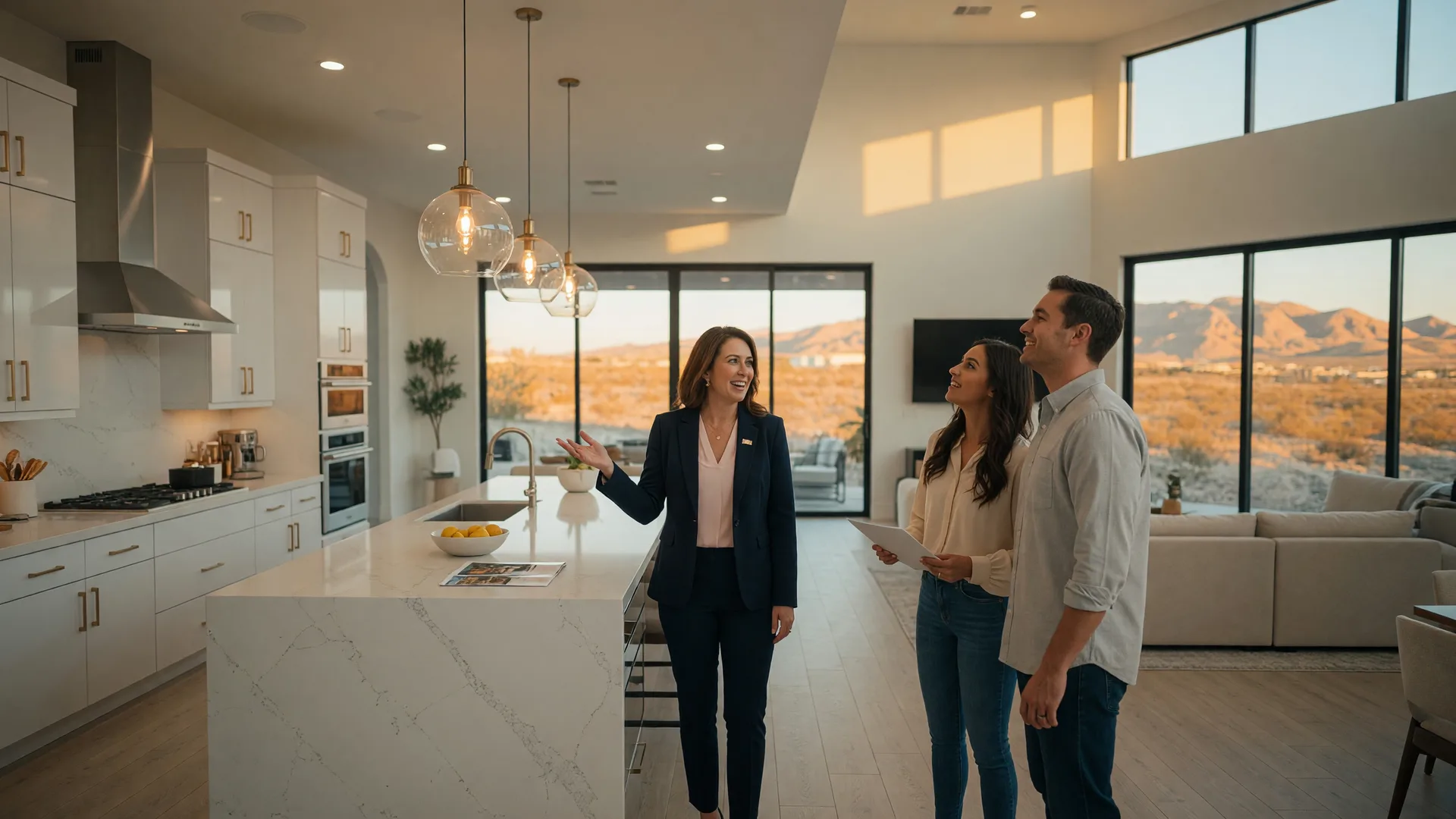
Most Las Vegas homebuyers compare price, floor plan and commute when they shop neighborhoods, and almost never factor in elevation. But where a home sits in the valley measurably changes how a Las Vegas summer feels, and overlooking it is one of the biggest mistakes I see buyers make. This article explains why elevation and microclimate belong on your checklist, which pockets of the valley run cooler, and what to do about it before you write an offer.
Quick Takeaways
- Elevation and microclimate are part of a home's real value: where the house sits in the valley changes how the summer actually feels.
- Forecasters commonly cite a general rule that temperature drops roughly 3 to 5 degrees per 1,000 feet of elevation gain.
- Summerlin sits on the higher west rim, commonly cited around 3,500 feet and topping out above 4,400 feet, and its cooler reputation has a real basis.
- Parts of Anthem, Inspirada and Southern Highlands also sit well above the valley floor, while much of the lower east side runs warmer.
- Don't buy on temperature alone: add elevation to your checklist, visit at the time of day you'll actually be home, and work with an agent who knows the valley's pockets.
Why do buyers overlook elevation and microclimate?
It is easy to see why elevation falls off the list. Listings show square footage, bedrooms, bathrooms and price, and the commute is already in your head. But nowhere on a listing does it tell you that the same floor plan can feel meaningfully different in July depending on which pocket of the valley it sits in. So buyers make one of the most common mistakes in Las Vegas real estate: they choose a neighborhood on price and floor plan, and never ask where it sits in the valley's elevation bands.
The Las Vegas Valley is not a flat bowl with one temperature. The valley floor sits at roughly 2,000 feet above sea level, while the higher west and south rims rise a thousand feet or more above it. On the hottest days of the year, the difference between the floor and the higher rims can be several degrees, and the overnight lows can be cooler still. That is the difference between a patio you actually use in the evening and a patio that stays uncomfortable until well after dark.
Does elevation really change how hot Las Vegas feels?
Yes, and the relationship is one forecasters have pointed to for years. As a general rule that is widely cited by National Weather Service forecasters covering this area, temperature drops as elevation rises, roughly in the 3 to 5 degree range per 1,000 feet of gain. It is an approximate, commonly cited rule of thumb, not a guarantee for any single afternoon, but it is a useful way to think about why the valley's neighborhoods differ.
Elevation affects more than the daytime high. Cooler air at altitude also means lower overnight lows. In a desert climate, the overnight low matters more than people expect: it is what makes evening outdoor living possible, what lets a house shed heat before the next afternoon, and what changes how much cooling a household actually needs. Sleep, evenings on the patio and summer energy use all track with how much the temperature drops after sunset.
None of this is a promise that a specific home will stay cooler or use less energy. Construction, insulation, window placement, shade and how a household sets the thermostat all matter at least as much as elevation. Think of elevation as one factor in a bigger picture, not a magic switch.
Which Las Vegas neighborhoods sit higher up?
If you want to see the elevation effect in practice, look at the communities on the west and south rims of the valley. The figures below are approximate and commonly cited, and individual streets within each community vary, but the general bands look like this:
| Neighborhood area | Approximate elevation (commonly cited) |
|---|---|
| Las Vegas Valley floor (much of Las Vegas, Henderson's lower areas, lower east side) | Roughly 2,000 ft |
| Sun City Summerlin | Commonly cited around 3,200 ft |
| Summerlin, higher west rim | Commonly cited around 3,500 ft, topping out above 4,400 ft |
| Anthem, Henderson | Commonly cited in the mid-2,700s (roughly 2,750 ft) |
| Inspirada, Henderson | Commonly cited in the mid-2,600s (roughly 2,600 ft) |
| Southern Highlands | Well above the valley floor on the southwest rim (approximate) |
These are general approximations from commonly cited sources, not surveyed measurements for any single street. Check a specific address against its own elevation before you draw conclusions.
Summerlin gets the cooler-temperature reputation for good reason. The whole master plan sits on the higher west rim, and much of it is commonly cited at around 3,500 feet, with the western edge rising toward and beyond 4,400 feet at the base of the mountains west of the valley. Sun City Summerlin sits at the higher end of the main Summerlin plateau, commonly cited around 3,200 feet.
The same logic applies on the south side of the valley. Southern Highlands sits well above the valley floor on the southwest rim, and Henderson's elevated pockets, including parts of Anthem and Inspirada, rise above the roughly 2,000-foot floor as well. By the same token, neighborhoods on the lower east side of the valley tend to run warmer, because they sit closer to the floor where the heat collects and lingers.
What does elevation actually change in day-to-day life?
The practical effect shows up in July. Take the same floor plan, the same builder and the same finishes, put one on the valley floor and one in a higher Summerlin pocket, and on a hot afternoon the difference may only be a few degrees. But in a Las Vegas summer, a few degrees is exactly the difference that decides whether you are comfortable, whether the house can get ahead of the heat, and whether the evening is worth spending outside.
Higher neighborhoods usually deliver more comfortable evenings, and they frequently come with the views that make the altitude visible: mountain, city and Strip-view homes are most common on the elevated rims. Those views are part of why elevated pockets often carry higher price points. The tradeoffs are real too. Homes on the west and south rims typically mean longer commutes to the east and southeast parts of the valley, where a lot of employment is located, and the most elevated communities tend to sit at prices above the valley average.
None of this means lower-elevation neighborhoods are bad places to buy. A well-built, well-oriented home with good shade can be perfectly comfortable at 2,000 feet. The point is simply to know what you are buying: elevation is a feature, like a view or a lot size, and it deserves the same attention as the rest of the checklist.
What should you actually do before you choose?
Elevation and microclimate should inform your decision, not dominate it. Here is how I tell buyers to put the checklist together:
- 1Add elevation and microclimate to your checklist, but don't buy on temperature alone. Treat where a home sits in the valley like any other feature: understand it, weigh it, and don't let it override the comparable sales and the lifestyle fit that matter just as much.
- 2Visit the neighborhood at the time of day you will actually be home. A 10 a.m. Sunday tour in March tells you little about July at 6 p.m. Walk the block in the evening in summer, sit on the patio and feel the breeze. If you are buying from out of town, ask a local to do an evening check for you.
- 3Ask about orientation, windows and shade. Which way does the back of the home face? Are the main windows west-facing? Where is the sun at 4 p.m.? Shade trees and covered patios change the picture as much as several hundred feet of elevation.
- 4Look at the home's own construction and energy features. Insulation, windows, HVAC age and efficiency matter alongside location. A newer, well-insulated home on the floor can feel better than an older home on the rim, which is exactly why the features deserve their own review.
- 5Work with an agent who knows the valley's pockets. The difference between neighborhoods is the kind of knowledge that comes from years in the market, not a portal search. An agent who has sold in Summerlin, on the south rim and on the east side can tell you what a specific street is actually like in July.
FAQ: Elevation and Las Vegas summers
Q: Does elevation really make a difference in Las Vegas heat?
A: Yes, and it is measurable. As a general rule commonly cited by National Weather Service forecasters covering the area, temperature drops roughly 3 to 5 degrees per 1,000 feet of elevation gain, and higher ground also tends to bring lower overnight lows. It is an approximation, not a guarantee for any single afternoon.
Q: How much cooler is Summerlin than the valley floor?
A: Summerlin sits on the higher west rim, commonly cited around 3,500 feet above sea level with parts of the western edge topping out above 4,400 feet, while the valley floor is roughly 2,000 feet. On the hottest days, higher pockets can run several degrees cooler. Exact differences vary day to day.
Q: Are higher-elevation Las Vegas neighborhoods always more expensive?
A: No. Elevation is one of several factors that shape price, alongside views, condition, floor plan and location. Elevated pockets often carry view premiums, but the right price is set by the market evidence for the specific home, so compare recent sales rather than assuming altitude equals a premium.
Q: Should I rule out lower-elevation neighborhoods?
A: No. Where a home sits is one factor, not the verdict. Orientation, windows, shade, insulation and the home's own construction matter just as much, and many well-built homes on the valley floor are perfectly comfortable. The goal is to know what you are buying, not to filter on elevation alone.
Q: Will a higher-elevation home definitely cost less to cool?
A: There are no guarantees on energy costs. Cooler air at altitude can reduce cooling demand in summer, but actual bills depend on the home's construction, insulation, window placement, HVAC equipment and how a household uses the thermostat.
Talk through the neighborhoods with someone who knows the pockets
I have spent more than 36 years in Las Vegas real estate and roughly 20 of those years as a licensed residential appraiser, and I know which parts of the valley run cooler, which pockets carry view premiums, and how to weigh elevation against everything else on your list. If you are comparing neighborhoods, or wondering how much the altitude is worth to you, let's look at the evidence together: Free Market Analysis · Book a Private Strategy Session · Cash Offer Question.
Sandy Margolin, REALTOR® | Certified AI Agent | 36+ years in real estate | formerly a licensed residential real estate appraiser | Nevada license S.0072707
Related Sandy Margolin resources

Written by
Sandy Margolin
REALTOR · Certified AI Agent · 36+ years in real estate · formerly a licensed residential real estate appraiser · Nevada license S.0072707.
More about SandyCurious how elevation fits your shortlist?
The article covers the general pattern. The conversation covers the specific streets you are actually looking at.