Pros and Cons of Living in Providence
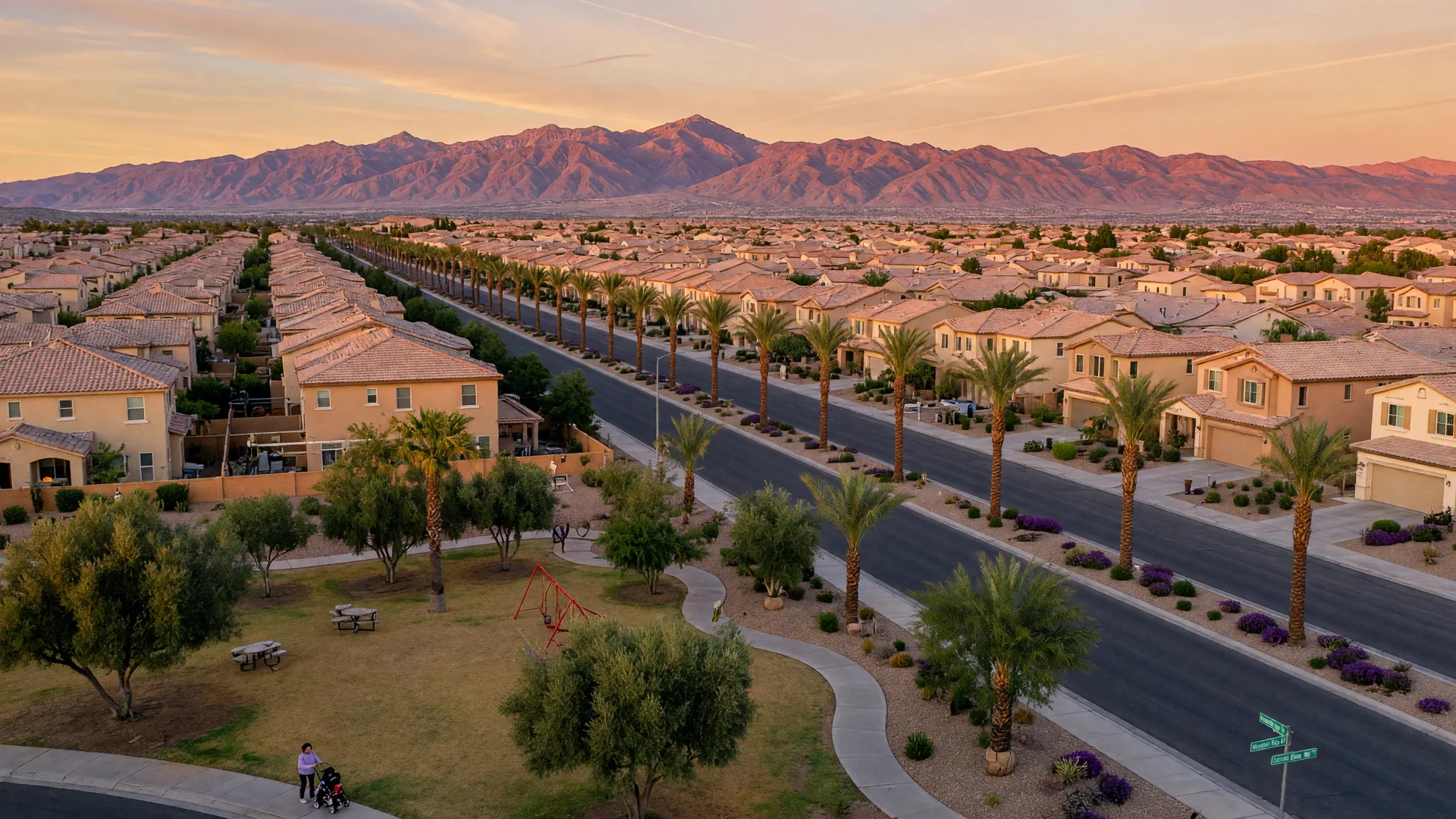
Providence is one of the largest master-planned communities in far northwest Las Vegas: a roughly 1,200-acre plan of thousands of homes, family parks and a village-by-village personality, sitting just off the 215 Beltway at Hualapai Way. The honest picture is that it delivers real value, low HOA fees and a built-out, family feel, and it trades that for a deeply car-dependent layout and long drives to most of the valley. Here is the straight rundown.
Key Takeaways
- Providence is a roughly 1,200-acre master plan in far northwest Las Vegas, off the 215 Beltway at Hualapai Way, built by Focus Property Group with first home sales in 2006.
- The plan holds roughly 5,600 to 7,500 homes across two to three dozen named villages built by a dozen-plus builders, so neighborhood character and gate status vary widely from street to street.
- Published 2026 figures put the ZIP-area median home value around $497,000, with typical single-family resales in the roughly $380,000 to $550,000-plus range.
- Car-dependent: the neighborhood Walk Score is around 10, with a Transit Score of 20 and Bike Score of 26, and the Strip sits roughly 15 to 20 miles away.
- HOA fees are low by valley standards: a master association commonly reported around $150 per quarter plus sub-association dues, for a typical total in the $50 to $150 per month range.
- Three large parks (Knickerbocker, The Promenade and Huckleberry) plus a connecting trail system anchor the family-friendly outdoor side of the plan.
Why Providence? A Neighborhood Overview
Providence sits in the far northwest of the Las Vegas Valley, just west of the 215 Beltway at Hualapai Way, in the Centennial Hills corridor near Floyd Lamb Park at Tule Springs. Focus Property Group broke ground in 2004 and the first homes sold in 2006, and the plan built out through the late 2000s and 2010s into roughly two to three dozen named neighborhoods, from Auburn and Bradford to Windemere.

Because more than a dozen builders built the neighborhoods, the plan has genuine variety: gated and open streets, single-family and townhome product, and different price points from village to village. That variety is both the appeal and the risk, because choosing the right Providence is really about choosing the right village. Around the homes sit three large community parks, Knickerbocker, The Promenade and Huckleberry, plus a trail network that ties the plan together. The full detail lives on the Providence community guide.
The Pros of Living in Providence
For the buyers it fits, the advantages are concrete:
- Real value for the northwest. With a 2026 ZIP-area median around $497,000 and typical resales in the $380,000 to $550,000-plus range, Providence delivers size and amenities at a price well below the west side of the valley.
- Low HOA fees. A master association commonly reported around $150 per quarter, plus sub-association dues, for a typical total in the $50 to $150 per month range, is meaningfully lower than many valley master plans.
- Family parks and trails. Three large parks, a splash pad, sports fields, dog parks and a connecting trail system give families a built-in outdoor life without leaving the plan.
- Choice of neighborhoods. Two to three dozen villages with different builders, floor plans, gates and lots mean there is a Providence for many budgets, as long as you choose carefully.
- Built out and settled. The construction cranes have moved on. Buyers get mature landscaping, established neighbors and a complete park system rather than promises on a map.
- Outdoor recreation on the doorstep. Floyd Lamb Park, the Tule Springs Fossil Beds and the Spring Mountains are close, with Mount Charleston recreation a drive up U.S. 95.
- Great for northwest-side workers. For anyone who works or lives on the northwest side of the valley, the location on the 215 at Hualapai is convenient rather than remote.
The Cons of Living in Providence
And here is the honest other side:
- Car-dependent to the core. The neighborhood Walk Score is around 10, with a Transit Score of 20 and Bike Score of 26. Groceries, schools, work and nearly every errand mean a drive.
- Distance from the rest of the valley. The Strip is roughly 15 to 20 miles, the airport around 25 miles, and Summerlin, Henderson and the east side are long commutes. The 215 and U.S. 95 traffic is the daily reality.
- Village-by-village variability. Gate status, HOA layers, builder quality and price differ from neighborhood to neighborhood. A ZIP-code assumption will mislead you; the block-by-block judgment is where a careful eye matters.
- Aging housing stock in the earliest villages. The first homes sold in 2006, so the oldest neighborhoods are approaching twenty years. Kitchens, systems and finishes may be due investment, and the refresh math is exactly where buyers need honest help.
- Everyday retail is corridor-based. Shopping and dining are spread along Centennial Center Boulevard and Durango Road rather than a walkable town center, so the errand-and-coffee part of life is car-based.
- Summer heat plus desert exposure. The open, unprotected edges of the plan get full desert sun, and the higher elevation helps evenings more than afternoons. Shade and orientation matter on any given lot.
- Limited 55+ product. Unlike the nearby Trilogy Sunstone 55+ enclave, Providence is primarily an all-ages plan, so active-adult buyers should look at the dedicated 55+ communities in the corridor.
Providence Real Estate: Pricing and Housing Stock
Published 2026 figures put the ZIP-area median home value around $497,000, with typical single-family resales spanning roughly $380,000 to $550,000 and beyond depending on size and village. Median list prices for the wider 89166 and 89149 area run higher, near $577,000, which tells you the sellers' hopes and the buyers' reality are still negotiating in places.
The housing stock is a mix of single-family and townhome product from a dozen-plus builders, built from the mid-2000s through the 2010s. That means real variety in style, lot and condition, and it also means the oldest villages carry refresh costs. As a former appraiser, I will tell you this is exactly the kind of plan where comparable selection matters: two homes a block apart in different villages can sit in different sub-markets, and price per square foot alone will mislead you.
If you are weighing Providence against the newer master plans nearby, the what is a home really worth guide and a conversation about the exact village will serve you better than any portal read. Knowing whether the age of a home is priced in is a numbers conversation, not a vibe.
Walkability, Transit and Lifestyle
Providence is honest about its car dependence. The neighborhood Walk Score is around 10, with a Transit Score of 20 and Bike Score of 26, so plan on driving for schools, work and nearly every errand. Pockets near the Pavilions shopping center on Dorrell Lane score higher, up into the 40s in places, but the community is a car community through and through.
What the plan lacks in walkability it substitutes with internal amenity: three large parks, a splash pad, sports fields, dog parks and a trail system that connect the neighborhoods. Floyd Lamb Park and the Tule Springs Fossil Beds are close, and the mountain recreation of Mount Charleston is a drive up U.S. 95, giving families and outdoor types a genuine escape hatch from the summer heat.
If your ideal day involves strolling to coffee, Providence is not it. If your ideal week involves parks, open space and a settled family routine with a car in the driveway, it very well may be.
Schools and Family Life in Providence
Providence is in the Clark County School District, with assignments by exact address through the Clark County School District. The high schools most commonly associated with the area are Centennial High and Legacy High, with elementary and middle school assignments varying by which village a home sits in. Boundaries change and CCSD rezones periodically, so verify the current zoning for a specific home before you commit.
Family life here is suburban in the well-tested sense: parks and sports fields inside the plan, roomier yards, weekend trips to the mountains, and a settled community of neighbors who have been around a while. The trade is the driving, and for families it is a steady rhythm of school runs and carpools rather than a walkable block. For buyers who care about the school corridor, the exact village and its current assignment matter more than the master plan name.
Is Providence Right for You?
Providence fits the buyer who wants value, space, family parks and a settled, built-out community in the far northwest, and who is happy trading walkability for a lower price and low HOA fees. It suits families, northwest-side workers and anyone who wants a lot of neighborhood for the money, as long as they are ready to choose the right village rather than the right ZIP code.
For buyers who need to be near the Strip, the airport or the east side every day, who want a walkable town center, or who are set on a 55+ community, the honest answer is that another part of the valley fits better. My job is to tell you which market actually matches your life, even when that means pointing you away from the far northwest. If you want to see where Providence lands against your numbers, that is exactly the conversation worth having.
Frequently Asked Questions About Providence
Q: Where is Providence in Las Vegas?
A: It is a roughly 1,200-acre master plan in far northwest Las Vegas (ZIPs 89166 and 89149), just west of the 215 Beltway at Hualapai Way, within the Centennial Hills corridor near Floyd Lamb Park at Tule Springs.
Q: How much do homes in Providence cost?
A: Published 2026 figures put the ZIP-area median home value around $497,000, with typical single-family resales spanning roughly $380,000 to $550,000 and beyond. Verify current pricing for a specific property.
Q: Is Providence walkable?
A: Overall, no. The Walk Score is around 10, with a Transit Score of 20 and Bike Score of 26. Pockets near the Pavilions shopping center score higher, but nearly all errands mean a drive.
Q: What are the HOA fees in Providence?
A: The master association is commonly reported around $150 per quarter, plus sub-association dues, for a typical total in the $50 to $150 per month range. Exact fees depend on the village.
Q: Is Providence gated?
A: Not as one big gate. The plan has many separate neighborhoods, some gated and some open, each with its own sub-association. Gate status depends on the village and exact address.
Q: What schools serve Providence?
A: The high schools most commonly cited are Centennial High and Legacy High, with elementary and middle assignments varying by address. CCSD assigns by exact address, so confirm current zoning.
Q: How far is Providence from the Strip and the airport?
A: The Strip is roughly 15 to 20 miles, about 20 to 25 minutes on the 215 and U.S. 95, and the airport is around 25 miles, typically 30 to 35 minutes depending on traffic.
Related Sandy Margolin resources
- →Providence: the full community guide
- →Skye Canyon, the outdoor-focused master plan nearby
- →Centennial Hills, the surrounding district
- →Northwest Las Vegas: every peer community
- →55+ and active-adult living in Las Vegas
- →What is a home really worth?
Deciding whether Providence fits your goals is a conversation, not a search result. Call or text me at 702-683-3362, or send me a note through the contact form, and we will look at your numbers and your priorities together. You can also book a private strategy session right here.

Written by
Sandy Margolin
REALTOR · Certified AI Agent · 36+ years in real estate · Former Appraiser · Nevada license S.0072707.
More about SandyIs Providence worth it for you?
The value and the parks are real, and so are the drives and the village-by-village differences. Let us put your numbers next to the lifestyle and see.