Barndominiums: A Buyer's Guide, in Plain English
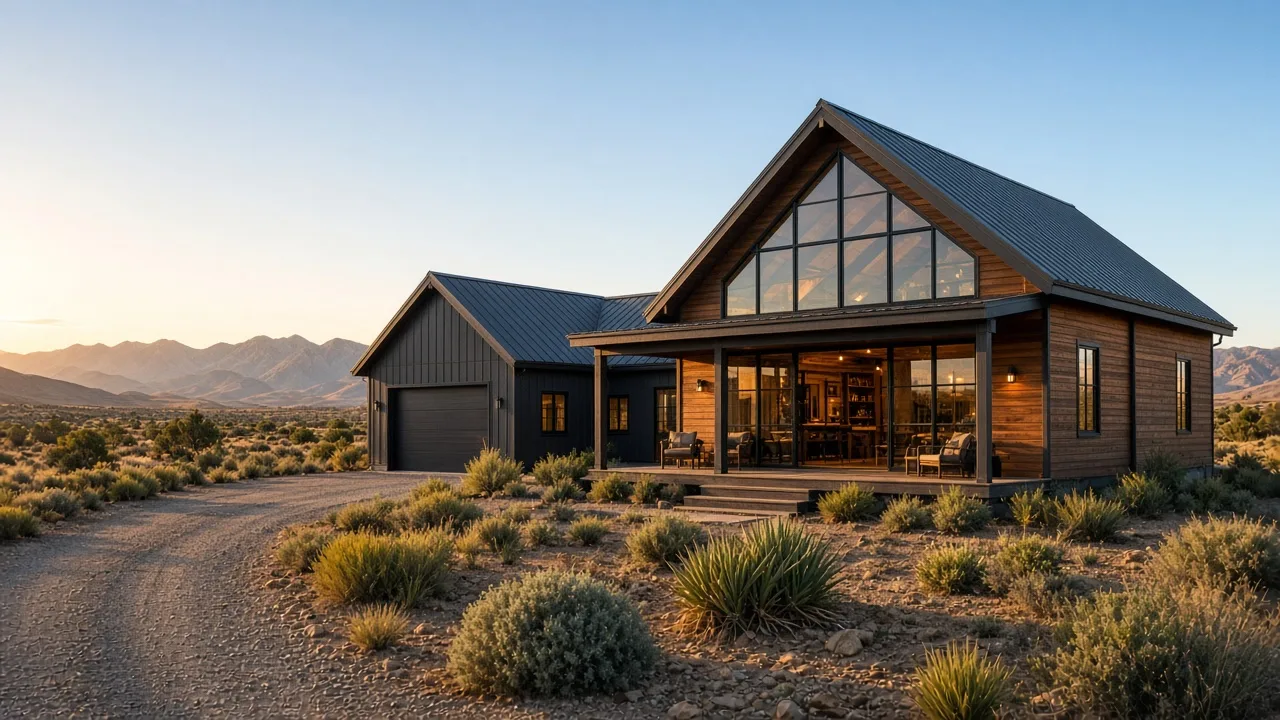
A barndominium is a home built to barn-style construction, often metal-framed, usually on a larger lot, with living space and workshop space under one roof. This guide covers what that really means, why it appeals to buyers, and the practical questions around financing, appraisals, insurance, zoning and resale, so you can weigh the idea honestly instead of on a trend.
What is a barndominium, really?
The word is a mashup of barn and condominium, and the definition is looser than you might expect. A barndominium is generally a home built to barn-style construction, often metal-framed, with the living quarters and a workshop, shop or garage bay under one roof. Some are converted farm buildings. Most are built new. What they share is a no-frills construction style and one big envelope of space the owner gets to divide up.
Because they usually sit on larger lots, often outside dense subdivisions, they appeal to people who want room to spread out: open living areas, tall ceilings, a real workshop and a place to keep a boat, a camper or equipment without building a second structure. Before you go far down this road, it is worth understanding how a barndominium gets financed, insured, appraised and eventually re-sold. Those four questions decide whether the appeal holds up on paper.
As someone who spent years appraising residential property before I ever sold it, I can tell you the value question is a market question: what similar properties actually sell for in that area. I will walk you through what to check so the decision is built on evidence, not on a photo of someone else's build.
Why barndominiums attract buyers
The appeal is real, and it is not hard to understand. These are the reasons people look seriously at barn-style homes, and none of them depends on hype.
Open, flexible space
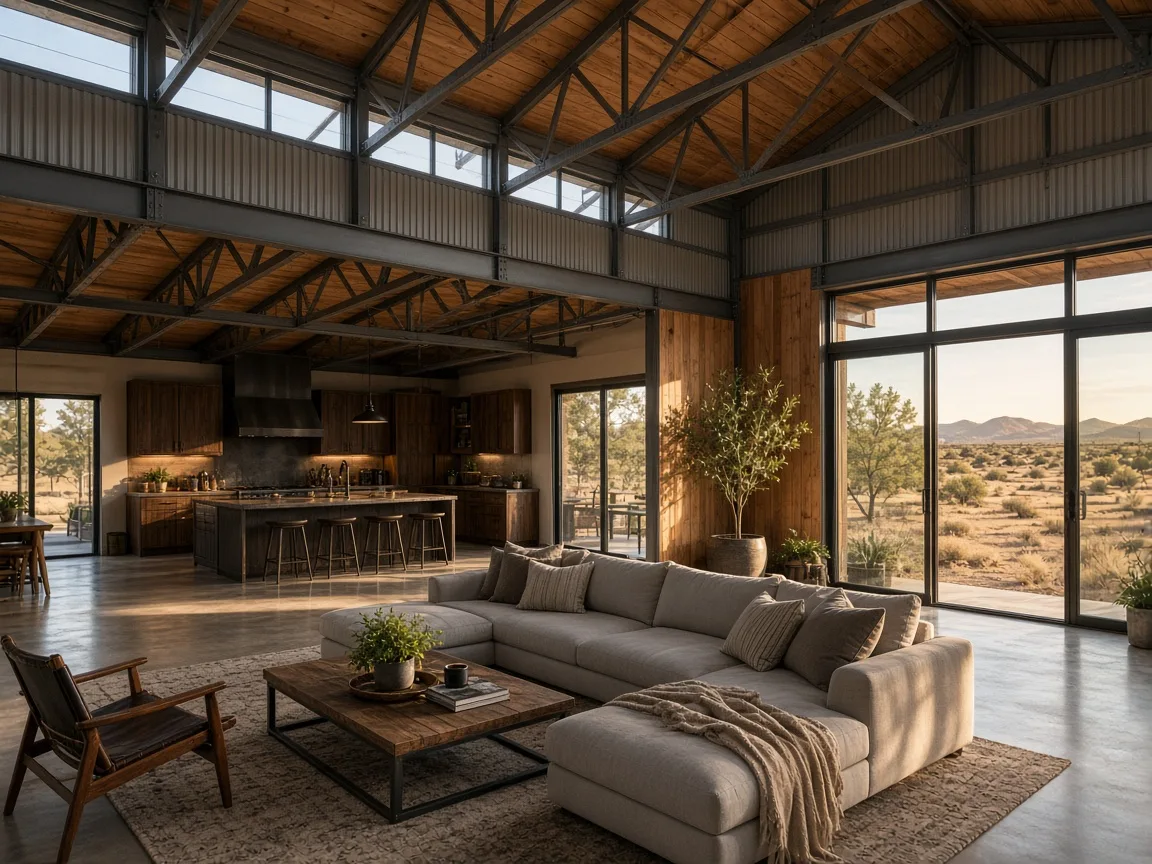
Barndominium interiors are built around one big envelope: tall ceilings, few interior walls and great rooms you can divide up the way you actually live. Instead of fitting your life into a fixed floor plan, you shape the space to fit.
Workshop and hobby space
The living quarters and the shop are usually under the same roof. That means a real workshop, a place to keep tools, toys, boats or equipment, without paying for a separate building to put them in.
Often a lower cost to build
Barn-style construction is typically simpler than traditional stick-frame building, and the per-square-foot cost is often lower as a result. Keep in mind the number moves with materials, labor, the site and the market, so the real figure comes from local builder estimates, not generalities.
One building instead of three
House, garage and workshop under one roof means one foundation, one roof and one envelope to maintain. On a larger lot, that efficiency is part of the genuine appeal for people who want room to spread out.
Wide open, the way you use it
Step inside a finished barndominium and the first thing you notice is the height. Exposed trusses, tall ceilings and large windows make one room feel like several, and the open plan means the kitchen, living area and dining space flow together. For people who entertain, work from home or just like to see the whole house from the kitchen, that openness is the point.
The flip side is honest to say: a big open space still needs finishing, and finishing costs money. Budget for the space beyond the shell, and understand what the builder's price actually includes before you compare it with a traditional home.
The real considerations before you commit
Barndominiums run on different rules than a traditional house in five areas that most buyers do not think about at first. None of them are dealbreakers on their own. All of them are worth knowing before you make an offer or buy land.
Financing: can you get a mortgage on a barndominium?
In many cases yes, but a barndominium is not an automatic fit for every loan program. Lenders generally want a home on a permanent foundation with a working kitchen, bathroom, heating, cooling and the other systems that make a property a residence rather than a shop building. Some lenders are cautious about metal-framed or nonstandard construction, so a loan that works on a stick-built house may take extra documentation or a different program here. If you are building, a construction loan typically covers the build and can convert to a permanent mortgage when you finish. If you are buying one already built, ask your lender about the property type up front, because the answer changes the budget before you ever make an offer.
Appraisal and valuation: how is a barndominium valued?
This is the question I care about most, and it comes from my years as a licensed residential appraiser. A home is worth what similar properties in that market actually sell for, and a barndominium is valued the same way whenever there are enough comparable sales to prove the market. In areas with few barndominium sales, the appraiser has to broaden the search, adjust for condition and size, and sometimes rely on the cost approach. The honest takeaway is that the market decides, and the market is different in every town and every neighborhood. What one sells for near an established subdivision can be very different from one on a rural lot with nothing similar nearby, so do not assume the value. Look at the evidence.
Insurance: what does coverage look like?
Not every insurance carrier writes a metal building, and the ones that do don't all treat it the same way. Some policies treat a barndominium like a home, others like a farm or commercial-style structure, and the premium can move accordingly. The workshop space, its contents and the liability that goes with them deserve a straight answer from an agent before you commit. It is a short phone call, and it is worth making before you fall in love with a property.
Zoning and design requirements: does local government care?
It absolutely does. Where a barndominium is allowed, the minimum size, how far it sits from the property line, what the exterior may look like and whether a design review applies all come from county zoning and building codes. Some jurisdictions welcome them; others have rules written for traditional homes that make a barn-style build difficult, and an HOA or subdivision covenant can simply prohibit the look. Check all of this before you buy land or sign a contract, and get the answers in writing.
Resale: how do they sell when it's your turn to move?
Here is the balanced version: some barndominiums resell easily and some take longer, and the difference usually comes down to the same things that matter with any home: condition, location and how big the pool of likely buyers is. A barndominium a broad range of buyers would enjoy has a much easier resale than one that only appeals to a very specific hobby. So it is fair to ask yourself who will want to buy it later and whether the area has enough of a market for that property type. Every property and every market is different, which is exactly the point: the resale question is a local question.
Every property and every market is different. The point of this section is not to talk you out of a barndominium. It is to make sure the numbers, the rules and the lending picture are checked locally, because the honest answers come from your market, not from a trend story.
A good fit, or think twice?
There is no one-size-fits-all answer in real estate, and barndominiums are a great example. Here is a fair read on who they tend to suit, and who should look carefully before committing.
A good fit if...
- You want workshop, shop or hobby space and would rather have it under the same roof as your living space.
- You value an open, high-ceilinged floor plan and do not need a lot of small rooms.
- You are buying a larger lot, often outside a dense HOA subdivision, where the county allows the property type.
- You are comfortable with a more hands-on build or purchase process and with doing your homework on lenders, insurers, appraisers and local rules.
- You plan to stay long enough that the resale question matters less in the short term.
Think twice if...
- Resale is your first priority. If you need the widest possible pool of future buyers, the resale question deserves serious weight before you commit.
- You want the simplest financing path. A traditional resale is easier for more lenders to underwrite than a metal-framed or nonstandard home.
- You expect a fully finished home on day one. Barndominiums often leave large unfinished areas, and finishing them is real money.
- You want a cohesive, subdivision-style neighborhood with an HOA. Many HOAs and design rules simply do not allow a barn-style home.
- There is no one-size-fits-all answer. Only real numbers from local lenders, insurers, builders and the county can tell you whether this fits your budget and your plan.
This is the part where I sound like the appraiser I used to be. I would never tell you a barndominium is a good idea everywhere, and I would never tell you it is a bad idea either. I would tell you what the evidence shows for your situation, and that is the whole job.
Barndominium on your short list? Let's look at the numbers.
If you are weighing a barndominium against a traditional home, the first conversation is free and there is no pressure. We will talk about what you want out of the property, which questions to chase down first, and what the financing, insurance and value picture looks like for your situation. Call, email, or start with the full buying process whenever you are ready.
Licensed in Nevada · Sales Person S.0072707 · Equal Housing Opportunity
Disclaimer: By providing your information, you agree to receive communications from Sandy Margolin. Message and data rates may apply. If the property is listed with another REALTOR® or Broker, please disregard. Information deemed reliable but not guaranteed.