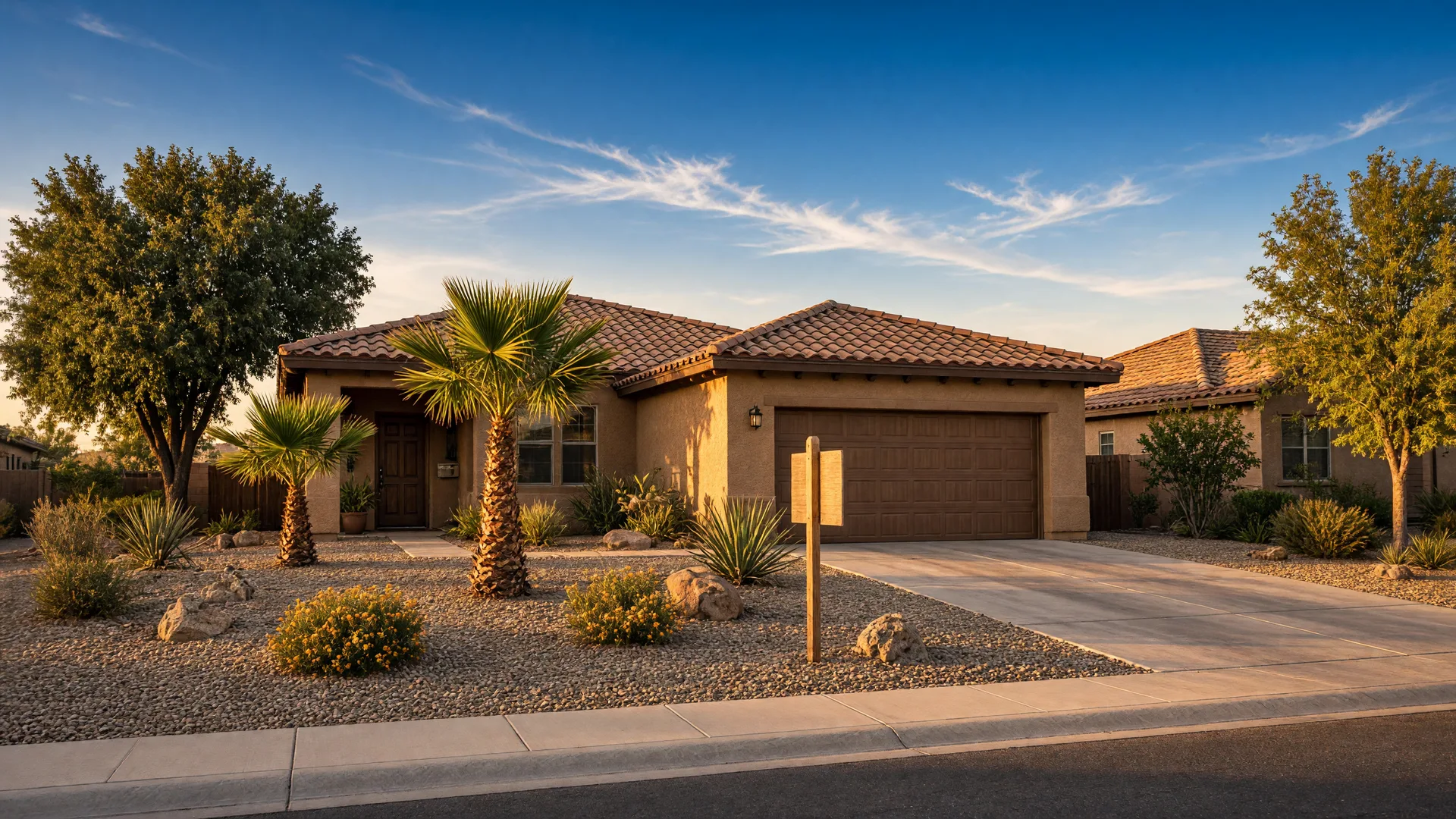
For Sale
By Owner
Selling a home yourself is a legitimate choice, and plenty of people have done it well. It is also a second job with a legal edge to it. This guide walks through what an owner-run sale actually looks like day to day, where the money is really won or lost, and where a second set of eyes is worth having. No lectures, no pressure, and no pitch at the end.
FSBO is a real option, not a mistake
Let me start by being fair to the subject, because a lot of what gets written about for-sale-by-owner is written by people who would prefer you did not do it. Selling on your own is legal, common, and sometimes the smartest path available. If you have time, patience, a marketable home and a willingness to learn the paperwork, you can absolutely do this.
What I will not do is pretend the job is smaller than it is. A home sale is a contract, a negotiation, a marketing campaign and a project management job that all happen at once, and the mistakes in each one cost money in different ways. My goal here is to show you the whole job honestly, so you can decide what you want to take on and what you would rather hand off.
You are allowed to get a valuation, a second opinion or a straight answer without listing your home with anyone. Asking a question is not a commitment.
What does an owner-run sale actually involve?
Most people picture a sign, a few showings and a closing. In practice it is eight jobs running at the same time, and each one has its own learning curve. Here is the honest list, in the order it usually happens.
Pricing the home
Without the closed-sale data agents work from, most owners price from a mix of online estimates, what the neighbor got, and what they hope the house is worth. Those three numbers rarely agree, and the gap between them is where FSBO money usually disappears.
Marketing it
Photos, a write-up, a sign, a listing on the consumer sites, and a plan for who sees it and when. Marketing is not one task, it is a small campaign that has to run for as long as the home is on the market.
Answering the phone
Inquiries arrive at odd hours, from people who may or may not be able to buy. Every call is a conversation you have to have, and a decision about whether to spend an hour with a stranger.
Showings and open houses
Scheduling, confirming, tidying the house each time, and being present or arranging access. It is a steady drumbeat of interruptions for as long as the home is listed.
Screening buyers
Separating serious, qualified buyers from browsers before you invest weekends in them. That means asking about financing, timing and proof of funds, which is a slightly uncomfortable conversation the first several times.
Paperwork and negotiation
The purchase contract, the disclosures, the counteroffers, the deadlines. This is the part that looks like an hour of signing and is actually the part that decides your net.
Inspections, appraisal and financing
Responding to repair requests, watching the buyer's loan move through underwriting, and handling an appraisal that may or may not support the price you agreed to.
Closing
Coordinating with the title company or escrow, tracking deadlines, reviewing the settlement statement, and making sure the numbers on the final page match what you thought you agreed to.
How do you price a home without MLS comparables?
This is the question that decides the whole sale, and it is the one most owners answer with the least information. I spent roughly two decades earlier in my career as a licensed residential appraiser, and the habit that stuck with me is simple: value comes from evidence, not from a feeling about your house. When you do not have the closed-sale data, you end up pricing from whatever is easiest to find, and the easiest things to find are the least reliable.
Here is what to keep in mind while you work out a number:
- Online estimates are automated opinions built from public records and broad patterns. They do not walk the house, see the condition, or know that the kitchen was redone and the roof was not.
- Price per square foot is a shortcut, not a valuation. Two homes of the same size on the same street can be worth very different amounts once condition, lot, view, upgrades and updates are accounted for.
- The most useful comparables are closed sales, not active listings. What a neighbor is asking tells you what sellers hope for. What a neighbor actually closed for tells you what buyers paid.
- Condition and location adjustments are where the real work happens. A pool, a view, a corner lot, a busy street, an aging HVAC system and a remodeled bath all move value, and they move it by different amounts.
- Days on market is information. A home that sits and then reduces its price teaches buyers to wait for the next reduction, and that reputation follows the listing.
The practical version: pull the closed sales you can find on your own street and in your own subdivision, look at what they actually sold for rather than what they asked, and then be honest with yourself about how your home compares. If you cannot find enough closed sales to feel confident, that is not a failure on your part. It is a sign that the data you need is not public, and it is the single most common reason an owner-priced home starts too high.
An overpriced home does not test the market. It teaches the market to wait, and the price you eventually accept is usually lower than the one you would have gotten by starting correctly.
Where do the buyers actually come from?
Marketing a home is not one action, it is a set of channels that each reach a different kind of buyer. The mistake owners make is picking one channel, usually a sign and a portal listing, and assuming the rest will take care of itself. The channels that matter most are the ones where your specific buyer happens to be looking.
The consumer portals
Most buyers start on the big search sites. A flat-fee or entry-only listing service can put your home in front of them, and it is worth understanding exactly what that service does and does not include before you pay for it.
A sign in the yard
Still one of the strongest local signals a home is for sale. Neighbors know someone who wants to live there, and drive-bys turn into showings more often than people expect.
Your own network
Friends, family, coworkers, the people at your gym, the person who has been admiring your street for years. A personal announcement is free and often produces the first real lead.
Photography and the write-up
Buyers decide in seconds whether to click. Clear, bright, honest photos and a description that states the facts plainly do more for a listing than any clever headline.
Buyer's agents
A large share of buyers are represented. If you are willing to work with them, the compensation question needs to be settled up front and in writing, before anyone brings you a buyer.
Social and video
A walkthrough video and a few posts cost nothing but time and can reach people who are relocating and cannot visit yet. It also means being reachable by people in other time zones.
One more thing worth saying plainly: exposure is not the same as interest, and interest is not the same as an offer. A listing that gets a hundred clicks and no showings is telling you something about the price, not the marketing.
Inquiries, showings and screening buyers
Once the phone starts ringing, the job changes from marketing to managing people. Some callers are ready to buy. Some are curious about the neighborhood. Some are neighbors who want to see your kitchen. All of them take time, and the skill is figuring out which is which in the first two minutes rather than the second visit.
A few questions do most of the work. Are they paying cash or financing, and if financing, are they already pre-approved? Do they have a home to sell first? What timeline are they working with? A buyer who can answer those three clearly is worth your Saturday. A buyer who cannot is worth a polite email.
Showings deserve a plan of their own. Confirm appointments in writing, keep valuables and medications out of sight, put away family photos if that matters to you, and never show the home alone to someone you have not spoken with. If a buyer is represented by an agent, that agent will usually handle the showing, which is both safer and easier for you.
Keep a simple written log of every inquiry: name, contact, how they are paying, what they said and what happened next. It protects you and it makes the follow-up far easier.
The contract is where money quietly moves
Sellers tend to focus on the price and skim the rest. The rest is where the price gets adjusted, delayed or lost. A purchase agreement is a stack of deadlines and conditions, and every one of them is a place where a buyer can ask for something or walk away.
- The purchase agreement itself: price, financing terms, closing date, possession date, and every contingency attached to them.
- The earnest money deposit: how much, who holds it, when it becomes non-refundable, and what happens if the deal falls apart.
- The seller's disclosures. Nevada requires sellers to disclose what they know about the property, and an incomplete or careless disclosure is one of the most common ways a seller ends up in a dispute after closing.
- The inspection period and what the buyer can ask for during it, including repairs, credits or a cancellation.
- The appraisal contingency and the financing contingency, which are two different escape hatches with two different deadlines.
- HOA documents, transfer fees, and any community rules that affect what a buyer is actually purchasing.
- Who pays which closing costs, and how credits are structured. A credit and a price reduction are not the same thing to your bottom line.
My honest advice for anyone selling on their own: have a Nevada real estate attorney review the contract and your disclosures before you sign anything. Not because you cannot read them, but because the cost of a review is small next to the cost of a mistake you did not know to look for. And be careful with the phrase a buyer's agent may offer, that they will just help you fill out the paperwork. Their loyalty is to the buyer, and it always will be.
Inspections, appraisal, financing and closing
This is the stretch where a signed contract stops feeling like a sale and starts feeling like a project. None of it is mysterious once you know the sequence, but all of it runs on deadlines you did not set.
The inspection response
A buyer's inspector will find things. Some are real, some are maintenance, and some are the inspector justifying the fee. Deciding what to fix, what to credit and what to decline is a negotiation, and it happens on a deadline.
The appraisal
If the buyer is financing, the lender orders an appraisal. If it comes in at or above the contract price, you move on. If it comes in low, you are choosing between renegotiating, challenging the appraisal with evidence, or watching the deal end.
The buyer's loan
Underwriting can ask for documents more than once, and a buyer's financing can wobble for reasons that have nothing to do with your house. Your closing date depends on a process you do not control.
Title and escrow
Title work, payoff statements, HOA demands, and the settlement statement all have to line up. Someone has to be the person who reads the final numbers and catches the error before signing.
The final walkthrough and closing
The buyer confirms the home is in the condition agreed to, the documents get signed, and the deed records. It is a short list of steps with a lot of moving parts behind it.
One thing I would flag for any seller, listed or not: read the settlement statement before you sign it. It is a page of numbers produced by someone else, and it is the last chance to catch a fee that does not belong to you.
The honest ledger: what you gain, what it costs
Every sale route trades something for something else. Here is the ledger without anyone telling you which column should win. The numbers in your situation are yours to work out, and I am deliberately not putting figures in this guide that would not be true for every home.
What selling on your own can give you
- You keep the listing side of the transaction, whatever that is worth in your situation.
- You control the price, the showings, the timeline and the marketing, with nobody to answer to but yourself.
- You learn your own market in detail, which is genuinely useful if you plan to buy again in the same area.
- You can move at your own pace, including pausing the process if life gets in the way.
What it asks of you in return
- Time. A well-run sale is a part-time job for weeks or months, and the hours land in evenings and weekends.
- Pricing risk. An overpriced home sits, and a home that sits gets discounted twice: once by the market and once by the buyer who assumes something is wrong.
- Negotiation risk. A buyer's agent negotiates purchase contracts for a living. Most owners negotiate one or two in a lifetime, and the imbalance shows up in contingencies, credits and deadlines.
- Legal and disclosure exposure. A contract you did not fully understand, or a disclosure you filled out too quickly, can cost far more than any commission you saved.
- Marketing cost. Photography, signage, listing services and paid promotion are real expenses, and they are paid whether or not the home sells.
- Holding cost. Every extra month on the market carries taxes, insurance, HOA dues, utilities and upkeep, and that money is gone whether or not you have a buyer.
- Deal risk. A transaction that falls apart in week six costs you the time, the momentum and often the best buyer.
Read those two columns side by side and you are looking at the real decision. It is not about whether FSBO is good or bad. It is about which trade-offs you can live with, given your home, your timeline and your tolerance for paperwork.
What can you realistically do alone, and where does help genuinely matter?
This is the part I wish more owners heard. You do not have to choose between doing everything and handing over everything. Most of an owner-run sale is genuinely doable, and a few specific pieces are worth paying for even if you never list with anyone.
You can absolutely handle
- Preparing the home: decluttering, cleaning, small repairs and paint. This is work you can absolutely do yourself, and it matters.
- Telling your own network. Nobody knows your neighborhood and your home better than you do.
- Hosting showings and open houses, if you are comfortable with strangers walking through your house.
- Answering questions about the property, the schools, the commute and the community, which you can answer better than anyone.
- Keeping a simple log of who came, what they said and what they offered. Good records make every later decision easier.
Where professional help earns its keep
- Pricing. A written opinion of value from someone who selects comparables for a living is the single highest-return hour you can spend before you list.
- The contract and the disclosures. Have a Nevada real estate attorney review the purchase agreement and your disclosures. This is not the place to save a few hundred dollars.
- Negotiation, especially with multiple offers, repair requests or a low appraisal. This is where the money actually moves.
- Anything complicated: probate, a trust, a divorce, a tenant in place, a home with deferred maintenance, or a property you do not live near.
- A second opinion at any point. You are allowed to ask someone to look at the numbers without hiring them to sell the house.
In my experience, the sellers who regret going it alone are rarely the ones who struggled with showings. They are the ones who priced from an online estimate, accepted a contract they did not fully understand, or agreed to a repair credit in week five that quietly cost them more than the commission they were trying to save. The fix is not necessarily to hire someone. It is to know which parts of the job carry the most risk and to get a real review on those.
You can get a valuation or advice without listing
I want to be clear about this, because a lot of owners assume that asking an agent a question means inviting a sales pitch. It does not have to. If you are selling on your own and you want a written opinion of value, a read on your disclosures, or a second set of eyes on an offer you have already received, that is a normal thing to ask for.
I am not a current appraiser and I do not provide licensed appraisal services. I gave up my appraisal license in 2013. What I do bring is roughly two decades of appraisal experience and more than 36 years of real estate experience, which means I can look at your home the way value is measured and tell you what the evidence supports, even if the answer is not what you were hoping to hear.
If you decide to stay on your own, that is a perfectly good outcome. I would rather you sell well than sell with me. And if at some point you want to compare your plan against a full listing, that conversation is available too, with no obligation attached to it.
Next resources
How a price gets set from market evidence instead of hope, and why overpricing costs more than it looks like it will.
Read it How to prepare your home for saleThe work that actually pays you back before a listing goes live, and the work that does not.
Read it Home appraisals for sellersWhat an appraiser looks at, and what happens when the appraisal does not support the contract price.
Read it Home seller negotiation secretsWhere money quietly leaves a sale, and how to hold your position without blowing up a good deal.
Read it Selling your home yourself: the short versionThe condensed take on FSBO, including the situations where it tends to work and the ones where it tends not to.
Read it All seller guidesThe full shelf of seller guides, from pricing and downsizing to probate and short sales.
Read itWant a second opinion before you go it alone?
If you are thinking about selling on your own, call me and let's look at what the market is actually telling us about your home. I will give you a straight read on the value, the pricing, the paperwork and the parts of the process that carry the most risk, and you can take it from there. If the answer is that you are in good shape to do this yourself, I will tell you that too. My job is to educate you so you can make an informed decision, and that is true whether or not you ever list with me.
Licensed in Nevada · Sales Person S.0072707 · Equal Housing Opportunity
Disclaimer: By providing your information, you agree to receive communications from Sandy Margolin. Message and data rates may apply. If the property is listed with another REALTOR® or Broker, please disregard. Information deemed reliable but not guaranteed.