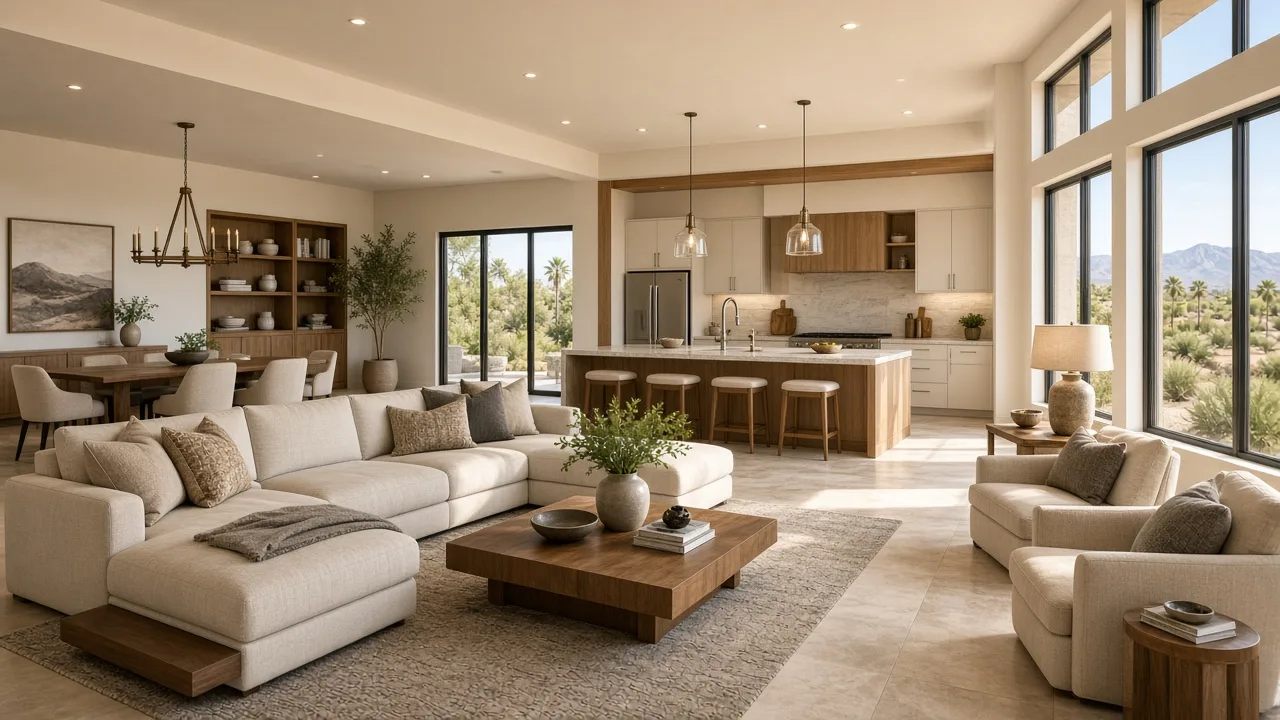
How Big of a Home Do You Need?
The right size is not really a number on a floor plan. It is whether the space fits the way you actually live, and how comfortably you can carry the cost of it. This guide helps you think it through before you go house shopping.
Start with the life, not the number
I have walked through homes with buyers for more than 36 years, and before that I spent about 20 years as a licensed residential real estate appraiser. If there is one thing that time taught me, it is that the square footage on the listing is one of the least useful numbers in the whole process. Two homes can list the exact same square footage and feel, and often be worth, very different things.
The number that actually matters is whether the home fits your life, and whether you are comfortable carrying every cost that comes with it. That is what this guide is about. It is not a sales pitch. It is the same sizing conversation I have across the table with buyers throughout the Las Vegas Valley, written down so you can think it through on your own.
Match the space to your actual days
The honest starting place is not how big, it is how you live. Family stage, how much you entertain, whether you work from home, and what you have planned next all shape the size and layout that will genuinely serve you. A single person who loves to host, a young family planning for kids, and a retired couple wanting a low-maintenance home need different space even when the household size looks similar.
Work through these questions honestly. There is no one-size-fits-all answer in real estate, and the space that is right for one neighbor may be entirely wrong for you.
- How do you actually spend your time? A home built for quiet weeknights and one built for weekly dinner parties need very different spaces, even at the same square footage.
- Who lives here now, and who visits? Family size, frequent guests, adult kids who still come home and aging parents who stay over all change the bedroom and bath math.
- Where do you work? If you work or study from home, a real office that closes a door matters more than a bonus room that is never quite comfortable to use.
- How much stuff do you carry? Storage is the part of square footage people underestimate most, and it is the hardest thing to fix after you move in.
- What is coming next? A growing family, a shrinking one, a new hobby, a possible caretaking role or a retirement plan all deserve a little forward thinking.
- Do you want to maintain it? Outdoor space, pools, big yards and extra rooms all need care, and that care is time and money you are signing up for.
Layout and usable space beat raw square footage
Here is a number trick years of appraising taught me: square footage is a starting point, not a verdict. What matters is how much of that space you can actually use, and how well it is arranged. A so-called bigger home can turn out to feel smaller than a thoughtfully laid out one.
Walk through the floor plan, not just the total. The same square footage can be arranged as several small rooms or one open living space, and the two feel entirely different.
Count the genuinely usable space. Wide hallways, odd nooks, wasted corners and a bedroom you have to walk through another bedroom to reach all eat into the number that actually helps you.
Watch the bedrooms and baths, not the total, for resale. Buyers in the valley tend to pay attention to the count and the flow of the rooms they will actually use.
Bigger is not automatically worth more. As an appraiser, the question was never simply size, it was whether the configuration added function and, eventually, value.
A floor plan that wastes space is the one thing you cannot fix cheaply, no matter what you spend after you move in.
Sandy's note
When I appraised homes, the question was never simply size. It was whether the configuration added function today and value down the road. A floor plan that wastes its space is the one problem you cannot really fix after you move in, no matter how much you spend trying.
The real cost of more space
Every square foot you add comes with a price tag, and it is not just the purchase price. A larger home is larger in every way that costs money, month after month, year after year. Before you size up, it pays to see the full cost of the space you are buying, not just the mortgage payment.
A higher purchase price means a larger loan, and on a real home the monthly payment is only the headline. Taxes, insurance and HOA dues usually scale with the size and value of the property too.
Utilities follow the space you have to heat, cool and light. In the desert that usually means keeping more square footage comfortable through long, hot summers.
Maintenance grows with the house and the yard. Bigger systems, more roof, more windows, more flooring and more landscaping all need to be serviced and eventually replaced.
Furnishing a larger home costs more, plain and simple. Empty rooms cost you nothing until you try to make them feel like home.
The rule I keep coming back to is simple: a home only makes sense if you can carry all of it comfortably, not just the mortgage.
This is exactly why the smart move is a full budget conversation before the house hunt, not after. The right price to pay is the one that leaves you comfortable carrying the whole home, not just the down payment.
Turn the list into a clear plan
Once you have worked through how you live and what you are willing to carry, you have something more useful than a target square footage: a clear picture of the spaces and layout that will truly serve you. That becomes the short list you take to the market, so every showing is a comparison against your real needs instead of a reaction to a pretty kitchen.
Two practical next steps make all of this real. First, get pre-approved with a lender, so you know the actual budget you are working with, including the costs beyond the payment. Second, work with an experienced local agent who understands Las Vegas, Summerlin and Henderson neighborhoods and how layout and value really behave in each one. Together those two steps keep the size question honest.
Start With the First-Time Buyer HubLet's find the size that fits your life
The honest way to size a home is to work backward from your life and your full budget. That is exactly how I help buyers across the Las Vegas Valley, and it starts with a conversation, not a house. Call, email or schedule a consultation whenever you are ready, and we will sort it out together.
Licensed in Nevada · Sales Person S.0072707 · Equal Housing Opportunity
Disclaimer: By providing your information, you agree to receive communications from Sandy Margolin. Message and data rates may apply. If the property is listed with another REALTOR® or Broker, please disregard. Information deemed reliable but not guaranteed.