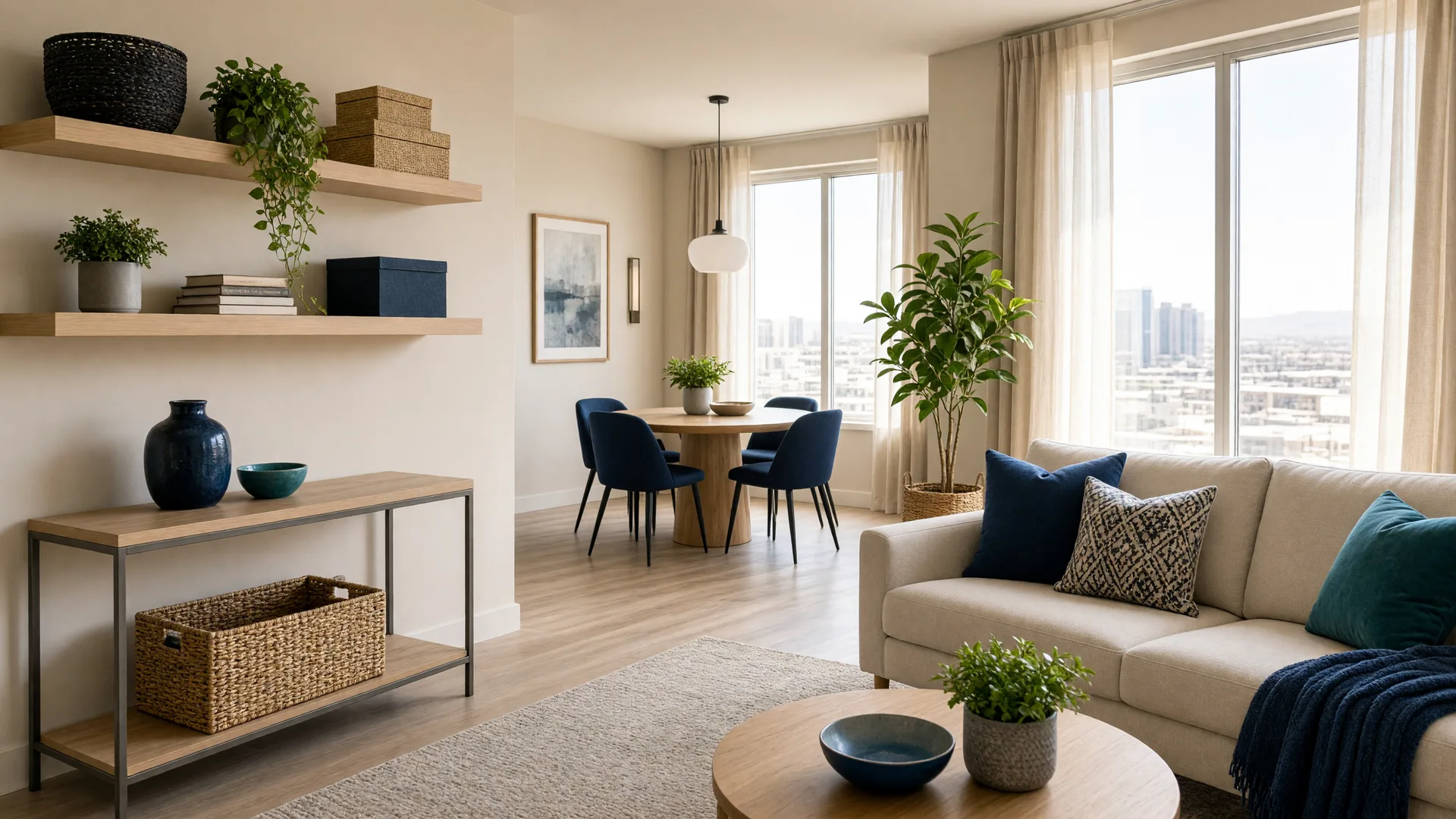
Scaling Down Small Spaces:
A Buyer's Guide
This is for Las Vegas buyers and owners moving to a smaller home, or making the most of the compact space they already have. The goal is not to shrink your life to fit a floor plan. It is to find the home where less space actually means more: less cost, less upkeep, more freedom, and a layout that works for the way you really live.
Smaller, done right, is a choice, not a loss
The biggest shift when people scale down is mental, not physical. After more than 36 years in real estate, I have watched buyers walk into a smaller home and feel the room count as a loss before they ever feel the lifestyle as a gain. So let me say it plainly up front: moving into less square footage is not a step backward. Done well, it is a deliberate step toward the life you want to spend your time and money on.
And here is the part that surprises most people: the house is often the easiest decision. The real work happens before the movers arrive, in deciding what belongs in your next chapter and what belongs to the one you are leaving. This guide walks through both sides, the practical and the emotional, my way: friendly, straight-spoken, and grounded in how a home actually earns its value.
So let us start where every good smaller-home decision begins: deciding what to keep and what to let go.
What to keep, what to let go: sorting with an appraiser's eye
I spent about two decades early in my career as a licensed residential real estate appraiser, and the habit never left me: value follows use. A room, a closet, even a wall only carries value if someone will actually use it. Belongings work exactly the same way. When you sort for a smaller space, you are not deciding what you love. You are deciding what earns its place in the next chapter.
That framing makes the sorting far less painful, because it turns every item into a simple question instead of an emotional verdict. Four questions do most of the work:
Does it get used, really?
The honest test. Ask how often you actually touch something in a year. Everyday items get first claim on the space. The rest, you get to decide about, and that is the point: the decision is yours, made on purpose.
Does it carry real meaning?
Keepsakes, photos, letters and family pieces earn their spot by meaning, not by size. Keep the things that would genuinely hurt to lose, and give everything else a respectful, deliberate goodbye.
Could it serve someone else?
Selling, donating or passing things to family turns letting go into giving. A first apartment, a new nursery or a charity that needs what your next chapter has outgrown is a good place for the things that served you well.
Would it fit the next home?
Measure the new place's closets, cabinets and garage before the movers arrive. A piece that will not fit the next home becomes a storage unit bill, and that is a monthly cost you can simply skip by deciding now.
An appraiser's eye for what adds functional value
My appraisal background permanently changed how I look at property. I learned to look past asking prices, beautiful photographs and price per square foot, and ask what the space actually does for the person living in it. In a compact home, that shows up in layout, light, storage and flow. Two homes can have the same square footage and very different usefulness, because what matters is how the space works, not how many rooms the floor plan draws.
Layout beats square footage
Useful space is what counts: how a floor plan flows, where the walls land, whether the rooms can actually be used the way you need. A clever smaller layout can feel more livable than a bigger one chopped into rooms nobody enters.
Natural light makes rooms feel bigger
Windows, orientation and how light moves through a compact home do a lot of the work. Two homes of identical size can feel completely different, and light is usually the reason.
Storage you can see
Built-in shelving, tall cabinets and closets that actually work turn a small footprint into an efficient one. When everything has a place, the space feels generous instead of tight.
Flow that fits daily life
The path from the car to the kitchen, the laundry to the bedroom, the entry to the guest bath. A home that flows with your routines wastes no square footage on awkward, unusable space.
Value follows function
This is where my appraisal background comes in. When we talk about what a home is worth, function is part of the story: how usable the space is, how well it is laid out, and whether a future buyer would see the same value.
Making rooms work harder: multipurpose furniture and storage
A smaller home asks each room to do more than one job, and that is very doable with a little planning. The goal is not to cram a big house into a small one. It is to give every space a clear job, and the furniture and storage to do it well. Buyers who shop with that in mind end up with homes that feel far larger than the square footage suggests.
Furniture that does double duty
A sofa that becomes a guest bed, a table that folds, ottomans with storage inside, a desk that tucks away. Multipurpose pieces let one room quietly cover several lives.
Vertical space is your friend
Tall shelving, wall-mounted cabinets and hooks put the space above your head to work. Up, not just out, is the fastest way to make a compact room hold more without feeling crowded.
Light opens a room
Layered lighting and mirrors make a compact room feel larger and warmer. It is one of the least expensive changes you can make, and one of the most effective.
Zones instead of walls
Area rugs, lighting and furniture placement can divide a studio or a great room into a living area, a dining area and a workspace without building a single wall.
When I show buyers a compact home, I point out how these pieces fit together: where the furniture goes, what the closets can hold, whether the layout supports a second life for each room. A floor plan only feels small when its potential is invisible.
The real benefits of less square footage
There are real, concrete upsides to a smaller footprint, and they compound every single month. I am not going to invent dollar figures, because your costs depend on your home, your HOA, your utility usage and your lifestyle. But the pattern is real, and it is worth naming plainly:
Lower monthly costs
Utilities, taxes, insurance, HOA dues and furnishings all tend to follow the footprint. I am not going to quote a dollar figure here, because your numbers are yours. But smaller usually means less to heat, cool, insure and furnish, and that leaves more room in the budget for the life you actually want.
Less upkeep, more time
Fewer rooms, less yard and less surface area mean fewer weekends spent cleaning, maintaining and repairing. The time you get back is one of the quietest wins of scaling down.
A lighter footprint
A smaller home uses less energy and fewer resources, which is an easy way to live a little greener without changing your habits or buying anything new.
Freedom, not just square feet
Buyers often tell me a smaller home gave them back options: travel, hobbies, a second home someday, retirement with less overhead. Money not tied up in a house keeps doors open.
The takeaway on the benefits
The value of a smaller home is not measured in what you give up. It is measured in what you get back: money in the budget, hours in the week, and a home that supports how you want to live next. When we run your actual numbers together, we can see what less square footage would mean for you specifically, and decide whether the trade is worth making.
Fit beats square footage: layout and lifestyle, not just room count
Here is the most important message in this guide: right-sizing is about fit, not about filling a set square footage. A buyer should look at layout and lifestyle, not just the number of rooms. I have walked buyers through smaller homes that felt enormous because every inch worked, and through larger homes that felt cramped because the floor plan fought them. The room count on the listing sheet is one of the least useful numbers in the whole decision.
Start with how you live
Morning coffee, your work-from-home setup, cooking, guests, hobbies, grandkids visiting. Write down a typical week and find the floor plan that serves it. The home follows the life, not the other way around.
Who will use this home?
A couple retiring, a family with young kids, a snowbird with guests, a professional who travels. The same compact floor plan fits some lifestyles beautifully and others poorly. Be honest about yours.
The community counts as space
In Las Vegas, what surrounds the home is part of the home: pools, fitness rooms, clubhouses, parks and trails. A smaller home in the right community can feel far bigger than its walls.
Fit is the sum of details
Parking, storage for bikes or gear, a guest spot for family, the HOA rules about what you can keep. The right smaller home is the one where all of those details line up with your life.
That is where an experienced agent earns their keep. Anyone can open the door to a two-bedroom; the work is helping you see which two-bedroom fits you. I match buyers to homes by lifestyle first: how you live, what you store, who visits, what you do on weekends. And because I know Las Vegas, Summerlin and Henderson well, I can point you to communities where a smaller home comes with a bigger life, from Sun City Summerlin and the valley's 55+ communities to high-rises, condos and master-planned neighborhoods.
Next resources
The practical, no-pressure guide to the full downsizing move, from clarifying your goals to sorting the boxes.
Read it How I Value HomesMy valuation method: comparable sales, condition, location and market behavior, not just price per square foot.
Read it 55+ Community GuidesActive-adult communities across Las Vegas and Henderson, where a smaller home often comes with more lifestyle.
Read itLet's find the fit, not just the floor plan
Whether you are buying a smaller home, moving into a 55+ community, or simply trying to make the space you have work better, I can help you see the options with clear eyes. Call or email, and we will talk about how you actually live, what your home is really worth, and which compact homes deserve a second look. No pressure, no rush, just an honest plan. And if this move is about a new chapter for you or a parent, the senior transitions guide is a warm place to start.
Licensed in Nevada · Sales Person S.0072707 · Equal Housing Opportunity
Disclaimer: By providing your information, you agree to receive communications from Sandy Margolin. Message and data rates may apply. If the property is listed with another REALTOR® or Broker, please disregard. Information deemed reliable but not guaranteed.