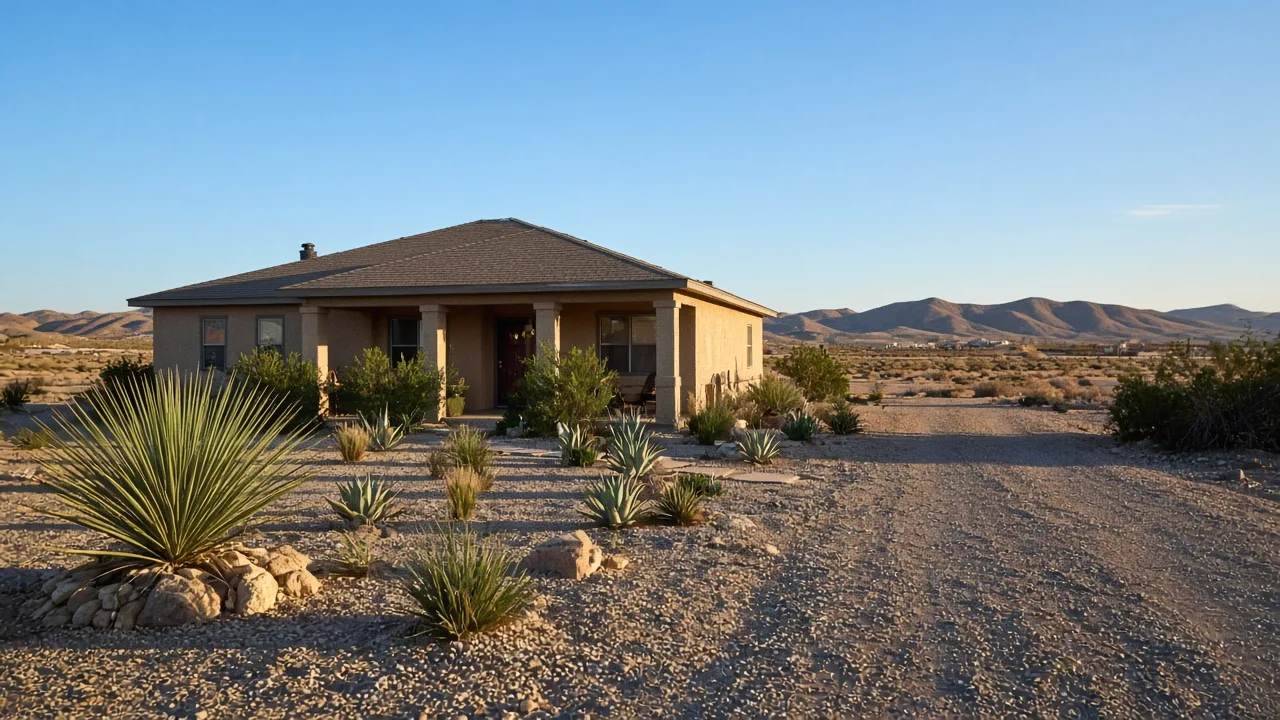
The USDA Loan:
A Zero-Down Path in Eligible Rural and Suburban Areas
The USDA loan, also called a Rural Development loan, is a mortgage backed by the U.S. Department of Agriculture that lets qualified buyers finance a home in an eligible rural or suburban area with no down payment. For a Las Vegas-area buyer, it is one of the few genuinely zero-down paths to homeownership, but only when the property and the household both qualify. This guide explains how the program works in plain English, how eligibility is decided, the general requirements, and the honest trade-offs worth weighing before you build a plan around it.
A mortgage backed by the U.S. Department of Agriculture
The USDA loan is a government-backed mortgage, but it is not a loan from the Department of Agriculture itself. You get the money from a regular mortgage lender, and the USDA guarantees a portion of it, which lowers the lender's risk and is what makes the program's favorable terms possible. The official name is the Single Family Housing Guaranteed Loan, and it is run through USDA Rural Development.
The program exists for a specific purpose: to help moderate-income households buy decent homes in rural and suburban communities that mainstream lending might otherwise pass over. That purpose shapes everything about it, including where you can use it and how much your household can earn. It is a program with an intent, not a blank check.
It is still a real mortgage. You make monthly payments, you pay interest, you carry homeowners insurance and property taxes, and the home is appraised and inspected like any other purchase. The headline feature, zero down, gets the attention, but the loan itself behaves like a loan. That matters, because the discipline that makes any home purchase work, knowing what you can afford and what the property is worth, applies here exactly the same.
Zero down: the feature that gets everyone's attention
For qualified borrowers, a USDA loan requires no down payment. No 20 percent, no 10 percent, no 3.5 percent. You finance the full purchase price, which means the single biggest barrier to homeownership, saving the down payment, does not apply in the same way. For a first-time buyer or a family rebuilding their savings, that can be the difference between buying now and waiting years.
Zero down does not mean zero cost. You still have closing costs, and the USDA charges its own guarantee fees, which we will get to in a moment. The no-down-payment feature is real, but the total cost of the loan is not automatically cheaper than every other option. It is one feature of the loan, not the whole story.
Here is where my appraiser background shows up. When there is no down payment, your equity starts at zero, so the property's value matters more, not less. The home has to be worth what you are paying, the appraisal has to support the price, and the resale logic has to hold. Zero down gets you in the door; value is what keeps the decision smart.
Two gates: where the home is, and what your household earns
The first gate is location. The property has to sit inside a USDA-eligible area, which Rural Development defines with its own maps. Eligible areas cover a lot of the country, including communities you would never describe as rural, but it is not every address in America. In and around the Las Vegas Valley, that means some communities qualify and some do not, and it is a property-by-property question, not a citywide yes or no.
The second gate is income. USDA sets household income limits that vary by location and household size, and the limits are designed to keep the program focused on moderate-income buyers. Importantly, it is total household income that counts, not just the borrower's, and the limits change over time. If your household earns more than the limit for your area, the program is not available to you, no matter how strong your credit.
Both gates are checked against current information. A lender who originates USDA loans runs the property address through the official eligibility map and applies the current income limits for your household size. Anything you read about who qualifies, including this page, is a general explanation; the current answer for your situation comes from that check.
The general requirements: a real mortgage with real rules
Beyond location and income, a USDA loan is underwritten like any serious mortgage. The home must be your primary residence, which means the program is not for investment properties or second homes. You need a credit history that meets the lender's standards, documented and stable income, and debt-to-income numbers that leave room for the payment. These are not USDA-only ideas; they are the basics of being approved for any loan, applied through the program's rules.
There are also requirements specific to the program. The property has to meet USDA's own standards, and because the program is intended for modest homes, there are limits tied to the size and value of the property for the area. The home also has to be appraised to market value, because the USDA wants to know the collateral supports the loan. That is familiar ground to me, and it is a feature, not a flaw: someone is checking that you are not overpaying.
The practical takeaway is that this is not a fast or loose loan. It is a structured program with a checklist, and the checklist is applied by the lender. A buyer who comes to the table organized, with income documented and expectations realistic, is a buyer who moves through the process smoothly.
The honest trade-offs: fees, location limits and fit
The first trade-off is cost. The USDA charges an upfront guarantee fee at closing and an annual fee on the loan, and those are how the program funds itself. They are real costs that show up in your payment and your closing numbers, and depending on your situation they can make a USDA loan more or less expensive than a conventional or FHA alternative. There is no universal winner; there is only the math for your specific loan.
The second trade-off is choice. Because eligibility is tied to location, a USDA loan limits where you can buy. If the community you love sits outside the eligible map, the program simply is not available for that home, and that constraint can feel frustrating when you have already set your heart on a place. It is far better to know the eligible areas at the start of your search than to discover the limit after you have made an offer.
The third trade-off is fit. The income caps exist on purpose, so buyers with strong incomes may not qualify, and buyers with thin credit may not meet the lender's standards. The program is a great fit for the households it was designed to serve, and it is not the right answer for everyone. That is not a criticism of the program; it is a reason to compare it honestly against the alternatives with a lender who works all of them.
Who does what
I am a real estate professional, not a lender. I can help you understand whether a USDA loan fits your search, and I can connect you with lenders who originate USDA loans in Nevada. But current eligibility maps, income limits, guarantee fees, rates and program requirements are set and updated by USDA and applied by the individual lender, and they belong in writing on your loan documents. Anyone who quotes you exact income limits or fee amounts without checking the current program details is guessing.
Next resources
Pre-approval, the common loan programs, and what drives your rate, step by step.
Read it How to Qualify for a MortgageWhat lenders actually look at when you apply, in plain terms.
Read it Down Payment AssistanceVA and USDA zero-down options, the FHA path, and state and local programs.
Read itLet's figure out whether a USDA loan fits your plan
I have spent more than 36 years helping Las Vegas buyers and sellers, and before that I spent years appraising homes for a living. What that means for you is simple: when we talk about a loan like this one, I can tell you not just whether it exists, but whether it makes sense for the home you want, the community you want to live in, and the budget you can live with.
If you are looking at the outlying areas of the valley, or wondering whether a zero-down path could work for your family, that is exactly the kind of question worth an honest conversation. I will help you understand the numbers, point you to lenders who actually work USDA loans, and tell you straight whether this program fits, or whether another path serves you better. That is what I do.
Licensed in Nevada · Sales Person S.0072707 · Equal Housing Opportunity
Disclaimer: By providing your information, you agree to receive communications from Sandy Margolin. Message and data rates may apply. If the property is listed with another REALTOR® or Broker, please disregard. Information deemed reliable but not guaranteed.