20 Reasons to Get Title Insurance in Nevada
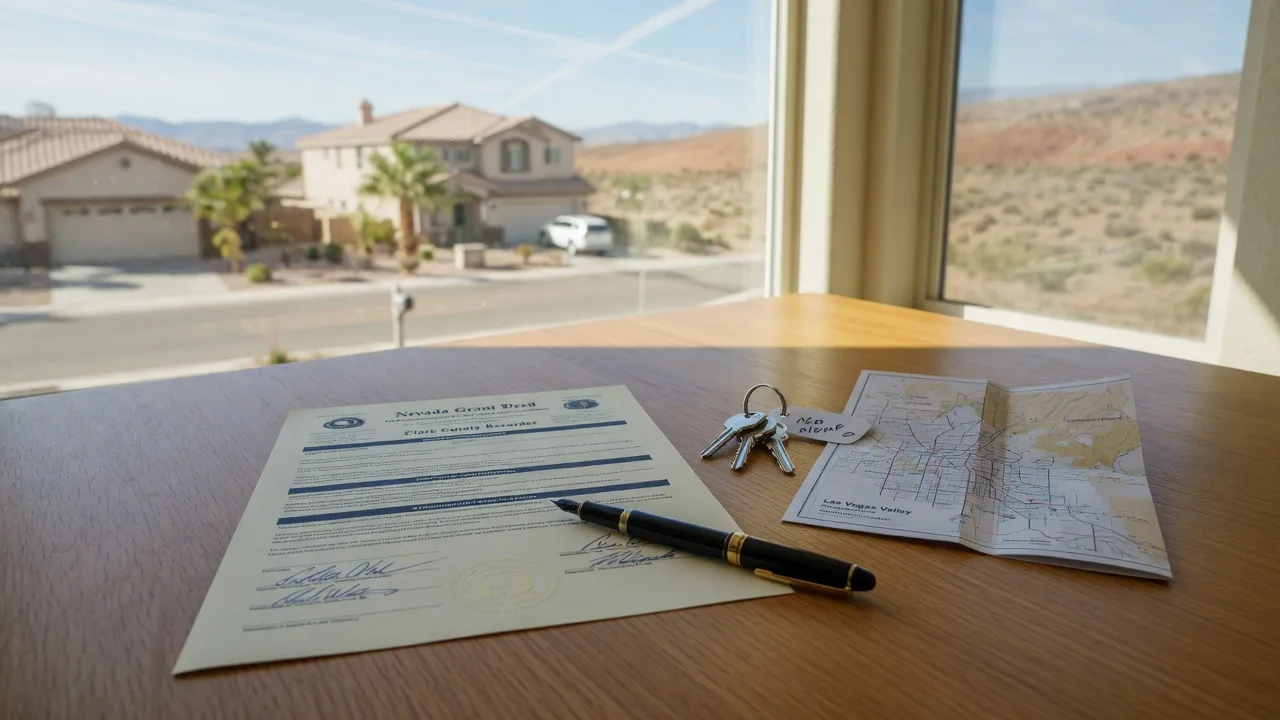
Title insurance protects you against problems in your home's ownership history: a lien that was never released, a signature forged decades ago, an heir no one knew existed. In Nevada, the seller customarily pays for the buyer's owner's title policy and the buyer pays for the lender's policy, both as one-time premiums at closing. If you are buying a home in Las Vegas, Henderson or anywhere in the Valley, here are the 20 reasons I still want buyers to say yes to the owner's policy, in plain English.
Quick Takeaways
- Title insurance covers the ownership record: hidden liens, forged documents, missing heirs and recording errors.
- It is a one-time premium paid at closing, and coverage lasts as long as you or your heirs hold an interest in the property.
- In Nevada the buyer customarily pays for the lender's policy and the seller provides the buyer's owner's policy; the state Division of Insurance says the split is negotiable.
- The title search catches most problems before closing. The insurance is the backstop for the ones it cannot catch.
- It is not homeowners insurance: homeowners insurance covers future damage, title insurance covers what happened in the property's past.
Title Insurance in One Paragraph
Before you close on a home, a title company searches the public records and traces the chain of ownership back through every deed, lien, judgment and sale, looking for anything that could cloud the title. Most problems surface during that search and get cured before closing, which is part of why title claims are relatively rare. The owner's policy then covers the defects that no search could have seen, and it pays to fix them or defend your ownership if they ever surface. You pay for it once, at closing. That is the whole product, and it is worth understanding before you decide it is not needed.
The 20 Reasons
I have grouped them so the first four sections are the problems nobody expects, and the last section is what the policy actually does about them.
What a title search cannot promise
Reason 1: No search is perfect
The title search catches a lot, but it cannot catch everything. The title industry's trade association, ALTA, has cited that roughly one in four residential transactions in the country surfaces some kind of title issue that has to be resolved before closing. That number tells you how much survives in the records. Most of those issues get cured during the sale, and the policy is for the ones that cannot be seen at all.
Reason 2: The records are kept by humans
Clark County property records go back a long way, and the people who wrote them made mistakes. Wrong names, misspelled legal descriptions, documents filed in the wrong place, signatures with improper witnesses or notarization. The industry calls these execution and recording errors, and they are among the most common reasons claims get paid. Title insurance covers the ones nobody caught.
Reason 3: Some documents never make it into the record
If a document was never officially recorded, no search can find it, because it is not in the records to find. An unrecorded deed, an old contract, a lien that was never filed properly. Some of those documents can still affect your ownership, and the policy covers you when one turns up.
Reason 4: Old property files have gaps
The longer a chain of title, the more links there are to go missing, and Las Vegas property can have decades of owners. Older records lived on paper and microfilm, and some were lost, misfiled or simply faded into illegibility. Every gap is a place a defect can hide.
Reason 5: Title problems travel with the property
This is the part that surprises people: a defect from fifty years ago is still your problem today, because ownership problems attach to the property, not to the person who caused them. You bought in good faith, but the old cloud is still on the title. The insurance is the backstop when that happens.
Owners, heirs and family claims
Reason 6: Undisclosed heirs can appear years later
When an owner dies without a clear plan for the property, an heir no one found can hold a valid interest in the home. An estranged sibling, a child from a first marriage, a relative nobody talks about. Those claims can surface long after closing, and the owner's policy covers you when they do.
Reason 7: Missing owners were never cleared from the record
Sometimes a former owner's name just stays on the chain. The deed was never recorded after a transfer, a spouse never signed a release, an estate was never formally closed. A missing link can make current ownership look shaky, and title insurers spend a great deal of effort repairing exactly that.
Reason 8: Probate can be messy
Wills that were never probated, estates that were never formally closed, executors who skipped steps. A home that passed through a poorly handled estate can carry an ownership question into the next sale. Title insurance is the repair kit for questions like that.
Reason 9: Family disputes surface after the sale
Inherited houses and divorces generate some of the most emotional disputes in real estate, and they rarely stay buried. Ex-spouses, siblings, estranged relatives. If someone with a legitimate claim challenges your ownership, the policy pays for the fight and the fix.
Liens, taxes and old debts
Reason 10: Unpaid property taxes never just go away
Property taxes attach to the land, and a tax lien from a prior owner can survive a sale. If the county has a claim against the house, the new owner inherits the problem until it is resolved. Title insurance covers it so you are not paying someone else's old tax bill.
Reason 11: Old mortgages are not always released
Homeowners pay off a loan and assume the matter is closed, but the release of that deed of trust must actually be recorded. Sometimes it never is, and the old lender's name sits on the title like an unpaid balance. Clearing that is exactly the kind of quiet, expensive paperwork a title policy handles.
Reason 12: Judgments and support liens attach to property
Unpaid court judgments, child support and spousal support orders can become liens on a home. When a previous owner had a judgment and the lien was recorded, it can cloud the title of the home you just bought. The policy pays to clear it or covers your loss.
Reason 13: Contractor and HOA liens are common around here
Mechanic's liens from unpaid work, HOA assessments from a prior owner, association claims. In a valley full of community associations, an old association claim is one of the more realistic surprises a buyer can face. The owner's policy has you covered.
Fraud and forgery
Reason 14: Forged deeds are real, and they are expensive
A signature forged somewhere back in the chain can mean the person who sold the property never actually owned it. Forgery and fraud claims make up roughly a fifth of what title insurers pay out, and one forged deed can trigger a claim for the full value of the home. That is a loss no buyer budget can absorb.
Reason 15: Title fraud targets homeowners even when nobody signs anything
Identity thieves file fraudulent deeds, record bogus liens and even take out loans against homes they do not own. The fraud may not show up until you try to sell or refinance. The owner's policy covers the loss and the legal cleanup.
What the policy actually pays for
Reason 16: It pays to fix the problem, or it covers your loss
If a covered defect shows up, the insurer does not just hand you a document. It clears the defect: satisfies the competing claim, pays off the lien, corrects the recorded error, or compensates you up to the policy amount. You end up with the home you paid for, clear and yours.
Reason 17: It pays the legal defense, even for groundless claims
Anyone can file a lawsuit, and defending your ownership is expensive regardless of who wins. The owner's policy covers the cost of the legal defense plus any judgment within the policy limits. In many cases the defense costs alone are worth far more than the one-time premium.
Reason 18: It lasts as long as you own the home
You pay once, at closing, and the coverage runs for as long as you or your heirs hold an interest in the property. No annual premiums, no renewals, no yearly letter asking for more money.
Reason 19: It is a modest one-time cost, and Nevada's rates are regulated
Nevada regulates title insurance under NRS Chapter 692A, and title companies must use filed rate schedules. A typical owner's policy runs roughly 0.55% to 0.61% of the purchase price on homes in the mid-$200,000s to $500,000s, and discounts for reissue and simultaneous issuance often bring the number down. Spread across the years you own the home, that is a small price for the peace of mind. And because the seller customarily provides the buyer's owner's policy in Nevada, many buyers are not the ones writing that check at all.
Reason 20: Homeowners insurance will never cover a title problem
Your homeowners policy covers future events: fire, wind, theft, water damage. Nothing in it covers a 1985 forged signature or an unreleased mortgage from 1992, because those are past events sitting in the ownership record. Title insurance is the only coverage written for the property's history.
How Nevada Handles Title Insurance
Two things about Nevada are worth knowing before you read your closing statement. First, who pays is customary, not mandatory. The Nevada Division of Insurance says the buyer traditionally purchases the lender's policy while the seller purchases the owner's policy for the buyer, and the split is negotiable. In most Las Vegas-area resales, expect the seller's side to carry the owner's policy and the buyer's side to carry the lender's policy.
Second, the premiums are regulated. Title insurance in Nevada operates under NRS Chapter 692A, rates are filed with the Division of Insurance, and the published rate manual includes money-saving details like the reissue rate, which discounts a new owner's policy when the property was insured within the past few years, and the simultaneous-issue discount when the owner's and lender's policies are written together at closing. Both are common in Las Vegas resales, and both are worth asking your title company about.
One more distinction that confuses people: the lender's policy protects the lender, not you. It is written for the loan amount and it is effectively required when you finance. The owner's policy is written for the purchase price, and it protects you, your equity and your right to the property. A lender's policy is not a substitute for the owner's policy, and the two are issued as separate coverages.
Title Insurance Questions Buyers and Sellers Ask
Q: Is title insurance required in Nevada?
A: Not by state law for the owner's policy. When you finance, the lender requires a lender's title policy, which protects the lender up to the loan amount. The owner's policy is voluntary, which is exactly why this article explains what it does. In Nevada the seller customarily provides the buyer's owner's policy, so the buyer usually benefits without paying it directly.
Q: Who pays for title insurance in Nevada?
A: By custom, the buyer pays for the lender's policy and the seller pays for the buyer's owner's policy. The Nevada Division of Insurance says the split is negotiable, so it can be shifted either way as part of the transaction. Ask your agent and your title company what the offer in front of you actually says.
Q: How much does owner's title insurance cost in Nevada?
A: It is a one-time premium based on the purchase price. Nevada's filed rates put a typical owner's policy at roughly 0.55% to 0.61% of the price for homes in the mid-$200,000s to $500,000s, so on a $450,000 home the base premium lands near $2,500 before discounts. The reissue rate and the simultaneous-issue discount often lower the number, and the seller customarily pays for the owner's policy in Nevada.
Q: What is the difference between an owner's policy and a lender's policy?
A: The lender's policy protects the mortgage lender up to the loan amount, and lenders require it. The owner's policy protects you up to the purchase price for as long as you or your heirs hold the property, and it covers legal defense. They are separate policies with separate coverage, and one does not replace the other.
Q: Does title insurance cover physical problems with the home?
A: No. Title insurance covers the ownership record: who owns the property, what liens and claims are attached to it, and what the history of the title contains. Physical condition is what inspections and homeowners insurance are for. A title policy will not cover a cracked foundation, and a home inspection will not cover a forged deed. You need both.
Q: How long does an owner's title policy last?
A: As long as you or your heirs hold an interest in the property. The premium is paid once at closing, and there are no renewal payments.
Next Steps: Worth a Conversation
Buying in Las Vegas, Henderson or anywhere in the Valley? By the time you read a title policy, the heavy lifting of your purchase is mostly done, but the questions on your closing statement deserve straight answers. That is the kind of conversation I have every week, and the first one is free. You can schedule a call with Sandy to walk through your transaction, or start with the plain-English buying guide if you are earlier in the process.
Related Sandy Margolin resources
- Buying a home in Las Vegas: the 10-step roadmap to closing, from the numbers you need first to closing day.
- Understanding closing costs for Las Vegas homebuyers: the full list of costs, including title and escrow.
- What is an appraisal gap, and who pays it? the valuation question buyers hit right before closing.
- What happens when a home inspection finds problems? the other protection a buyer needs, for the house itself.
- Closing in the buying guide: escrow, title, the Closing Disclosure and closing day.

Written by
Sandy Margolin
REALTOR® · Certified AI Agent · 36+ years in real estate · Former Appraiser · Nevada license S.0072707
More about SandyBuying and wondering what the closing statement is really saying?
We walk through title, escrow, fees and the full numbers before you sign, in plain English.