How Do Cash Offers Actually Work?

A cash offer sounds simple: a buyer skips the mortgage and pays for the house outright. The mechanics behind it, though, are more specific than most people expect, and they matter whether you are the buyer writing the check or the seller deciding which offer to accept. This article walks through exactly how a cash offer works, step by step, from proof of funds to closing day, and the honest trade-offs on both sides of the table in Las Vegas.
Quick Takeaways
- A cash offer is a purchase made without a mortgage, so there is no financing contingency and no lender in the chain.
- Buyers prove the money with proof of funds: a recent bank statement or an official letter from a bank, credit union or brokerage showing an available balance at least equal to the offer.
- Reported common guides say cash deals close in about 7 to 14 days, versus roughly 30 to 45 days for a conventional loan and 45 to 60 or more for FHA and VA.
- Cash buyers often pay less: reported analyses put the average cash discount at roughly 9 to 11 percent below what a financed buyer pays.
- In Las Vegas, reported REALTORS data shows cash made up about 21.8 percent of sales in March 2026, down from 24.6 percent a year earlier.
What a Cash Offer Actually Is
A cash offer is a purchase agreement in which the buyer commits to paying the full purchase price from liquid assets, with no mortgage attached. That one fact changes everything downstream: because there is no loan, there is no financing contingency, no lender-required appraisal, no underwriting and no lender's title policy requirement. The sale depends on the buyer's money, the title being clean and the paperwork getting done, which is why cash transactions move so much faster than financed ones.
It is worth being precise about what "cash" means here. It does not mean a briefcase of bills. It means funds that are immediately available in a bank account, brokerage account or similar liquid form, and the buyer has to prove it. That proof is the first real step of the process, and it is where a lot of offers live or die.
Step 1: Proof of Funds
Before a seller takes a cash offer seriously, the buyer shows the money. The standard documents are a recent bank statement dated within the past 30 to 60 days, or an official proof-of-funds letter from a bank, credit union or brokerage on letterhead, dated within roughly the past 30 to 90 days. The document needs the account holder's name, the account type and an available balance at least equal to the offer price.
Sellers and their agents verify this document carefully, because a proof-of-funds letter is only as good as the account behind it. If the balance is short of the offer, or the document is stale, the offer loses its credibility. As a former appraiser, I tell buyers the same thing I tell sellers: the numbers have to make sense, and the paperwork has to back them up.
Step 2: The Written Offer
The buyer submits a written purchase agreement stating it is an all-cash transaction, with the proposed price, earnest money deposit, closing date and any contingencies the buyer wants to keep. In a cash deal, the financing contingency is simply absent, but buyers can still include an inspection contingency, an appraisal contingency or a title review period if they choose. A cash offer is not automatically an as-is offer; those are separate decisions.
The earnest money deposit works the same way it does in any sale: it is held in escrow and shows the seller the buyer is serious. In cash deals it is often larger relative to the price, because the buyer is not relying on a lender and can afford to put more down as a show of good faith.
Step 3: Verification and Due Diligence
Once the offer is accepted, the seller's side verifies the proof of funds, and the buyer's side runs the same due diligence a financed buyer would, minus the lender pieces. That normally means a title search and, if the buyer kept the contingency, a home inspection. Because there is no lender, there is no lender-required appraisal and no underwriting, which removes the two biggest sources of delay and the two most common reasons financed deals fall apart.
This is also where a buyer can still protect themselves. A cash buyer who waives the inspection to make the offer more competitive is taking on the condition risk themselves. My advice to cash buyers is the same as to anyone else: understand what you are giving up before you give it up, and let the inspection tell you what the photos cannot.
Step 4: Closing
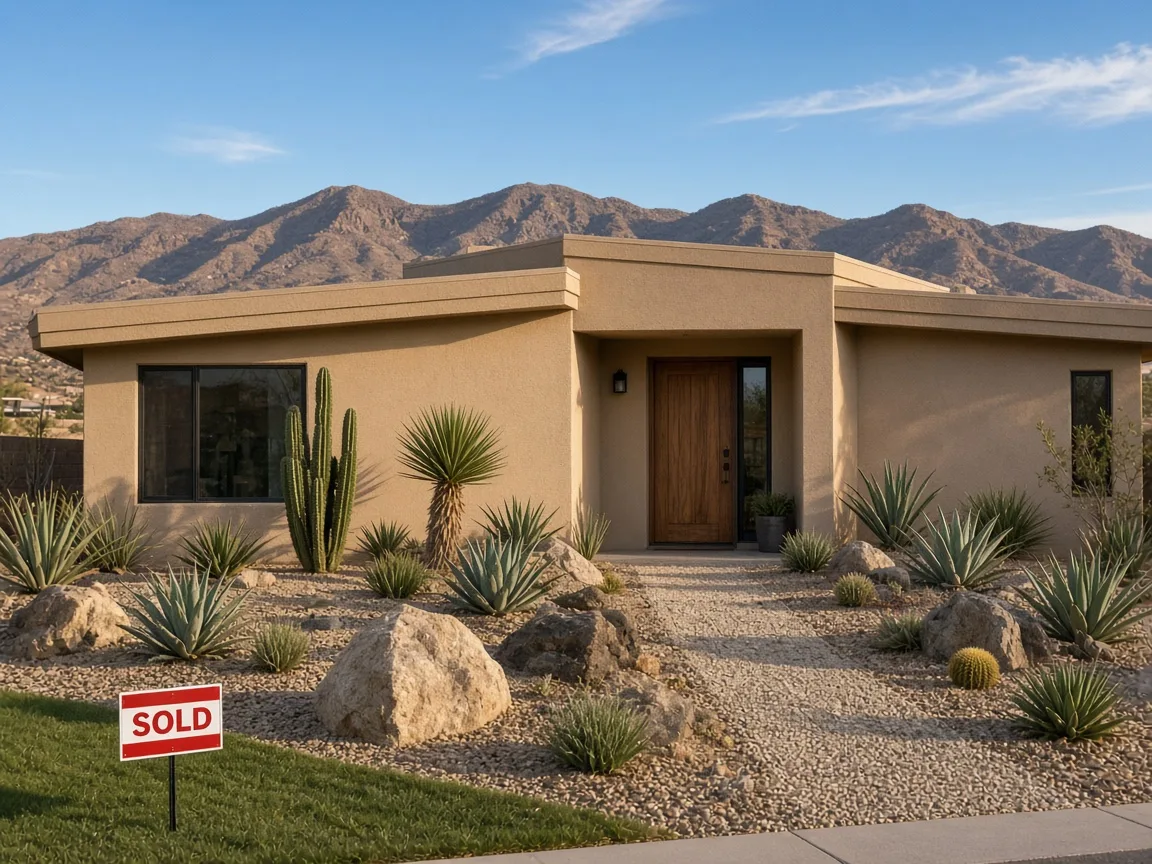
At closing, the buyer pays the full purchase price, typically by wire transfer or a bank cashier's check made out to the escrow agent, and the title and deed transfer to the buyer. Because there is no lender, there is no Closing Disclosure waiting period and no lender coordination, so the closing appointment itself is simpler and faster. Reported common guides put all-cash closings at about 7 to 14 days from an accepted offer, versus roughly 30 to 45 days for a conventional loan and 45 to 60 or more for FHA and VA loans.
Buyers should still expect closing costs: title insurance, escrow fees, recording fees and any transfer taxes. Cash removes the loan costs, but it does not remove the transaction costs. The title company handles the wiring and the deed transfer, and once the funds clear, the buyer holds the keys free and clear.
Why Sellers Like Cash Offers
The appeal of a cash offer to a seller is certainty. A financed deal can fail because the buyer's loan falls through, because the appraisal comes in low or because underwriting drags past the closing date. A cash deal removes all three of those failure points. The buyer's money is already in the bank, so the main risk left is the title and the paperwork, and those are handled by professionals on both sides.
Cash also means speed, which matters to sellers who are relocating, closing on a purchase of their own, or simply ready to move on. A 10-day close can be the difference between a smooth transition and a scramble. For sellers in that position, a slightly lower cash offer can genuinely be worth more than a higher financed offer that takes twice as long and might not close at all.
The Honest Trade-Off: Cash Often Pays Less
Here is the part I always put on the table for sellers: cash is not free money. The buyer is giving up financing flexibility, and in exchange they typically expect a lower price. Reported analyses put the average cash discount at roughly 9 to 11 percent below what a financed buyer would pay. That is an average, not a rule. In a competitive market, a cash buyer may pay full price to win the home; in a slower market, the discount can be larger.
The right decision is never automatic. A seller who needs certainty and speed may take the cash offer happily. A seller who wants the highest number may list on the open market and let competing buyers set the price. That is exactly the comparison I run for my clients, side by side, with their actual numbers, before they sign anything. If you want the full comparison of cash, iBuyer and traditional listing routes, the cash offer myth-buster covers the reported numbers in depth.
How Common Are Cash Offers in Las Vegas?
Cash is a real part of the Las Vegas market. Reported Las Vegas REALTORS data shows cash transactions made up about 21.8 percent of local property sales in March 2026, down from 24.6 percent a year earlier, and far below the 59.5 percent peak recorded in March 2013, when the market was still working through the foreclosure era. Today cash buyers tend to be investors, out-of-state buyers and downsizers selling one home and buying the next with proceeds, and they show up across price points, including the luxury market.
For buyers, that means a cash offer is a genuine competitive weapon, especially in multiple-offer situations. For sellers, it means cash offers are common enough to evaluate seriously, but not so dominant that the open market is not worth running. The numbers in this article are reported figures, not promises for any specific transaction, and the actual picture for your home depends on your market, your price and your timing.
Cash Offer FAQ
Q: What is a cash offer in real estate?
A: A cash offer is a purchase made without a mortgage. The buyer commits to paying the full price from liquid assets, so the purchase agreement carries no financing contingency, and the sale does not depend on a lender's approval or appraisal.
Q: How do you prove you have cash to buy a home?
A: Buyers provide proof of funds: a recent bank statement dated within the past 30 to 60 days, or an official proof-of-funds letter from a bank, credit union or brokerage on letterhead, dated within roughly the past 30 to 90 days. It shows the account holder's name, account type and an available balance at least equal to the offer price.
Q: How fast can a cash offer close?
A: Reported common guides say all-cash deals typically close in about 7 to 14 days from an accepted offer, versus roughly 30 to 45 days for a conventional financed purchase and 45 to 60 or more days for FHA and VA loans. Cash closes faster because there is no lender underwriting, no lender-required appraisal and no financing contingency.
Q: Do cash offers come in below market value?
A: Often, but not always. Reported analyses say cash buyers on average pay roughly 9 to 11 percent below what a financed buyer would pay, because sellers trade a lower price for speed and certainty. The exact number depends on the home, the market and the buyer, and it is worth comparing the cash offer against a traditional listing before deciding.
Q: How common are cash offers in Las Vegas?
A: Reported Las Vegas REALTORS data shows cash transactions made up about 21.8 percent of local property sales in March 2026, down from 24.6 percent a year earlier and well below the 59.5 percent peak in March 2013. Cash is still a meaningful share of the market, especially among investors and out-of-state buyers.
Q: Is a cash offer the same as an as-is offer?
A: No. Cash describes how the buyer pays; as-is describes whether the seller will make repairs. A cash buyer can still ask for an inspection and request repairs, and a financed buyer can still buy as-is. They are separate decisions, and both should be spelled out in the offer.
Next Steps: Worth a Conversation
Whether you are thinking about making a cash offer or deciding whether to accept one, the fastest way to see the real numbers is a conversation, and the first one is free. You can schedule a call with Sandy to compare your options side by side, or start with the plain-English comparison of the selling routes.
Related Sandy Margolin resources
- The cash offer myth-buster: reported speed versus reported net proceeds across cash, iBuyer and traditional routes.
- When a cash offer may make sense: the seller's guide to the as-is cash route.
- Buying a home in Las Vegas: the 10-step roadmap to closing, from the numbers you need first to closing day.
- Understanding closing costs for Las Vegas homebuyers: the full list of costs, including title and escrow.
- What is an appraisal gap, and who pays it? the valuation question financed buyers hit right before closing.

Written by
Sandy Margolin
REALTOR® · Certified AI Agent · 36+ years in real estate · Former Appraiser · Nevada license S.0072707
More about SandyCash offer on the table, or thinking about making one?
We run the real numbers side by side, so you know exactly what each route nets before you decide.