Is Buying a Home in Las Vegas in 2026 a Mistake?
Market commentary · reflects the Las Vegas REALTORS report for September 2026 and Freddie Mac mortgage rate data from October 2026
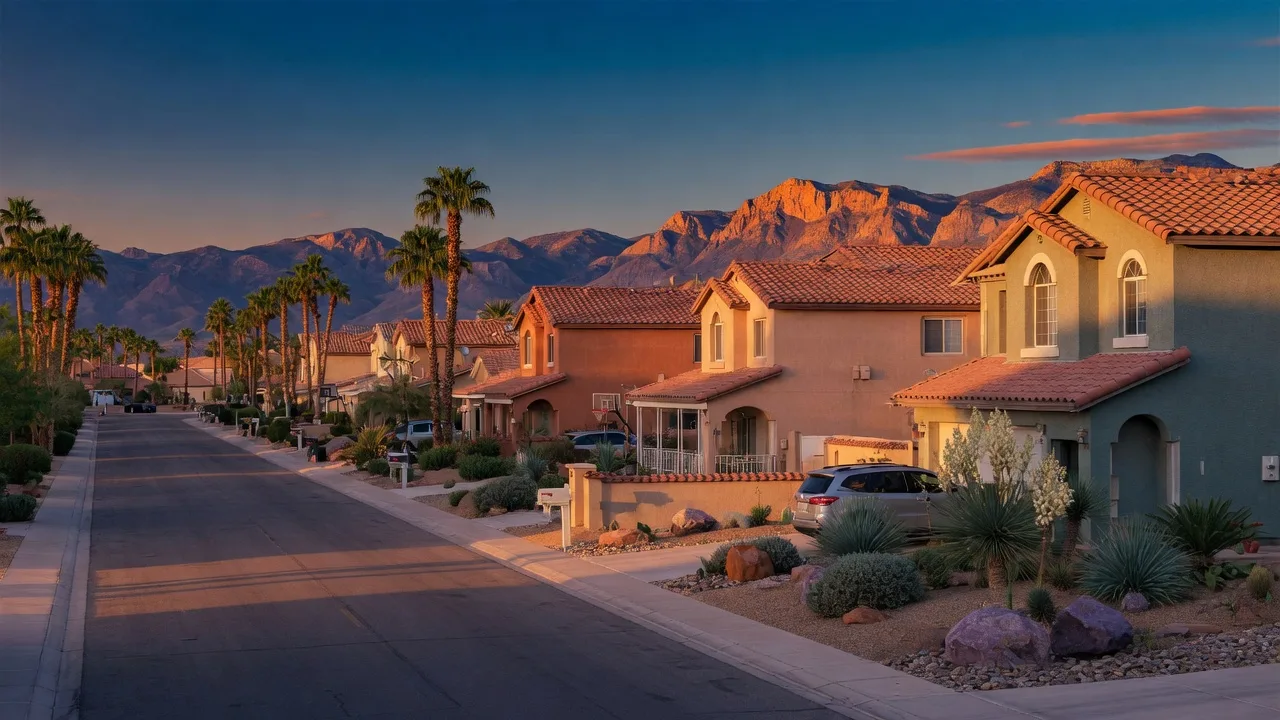
Buying a home in Las Vegas in 2026 is not a mistake for most qualified buyers, but the honest answer is that it depends on your numbers, your timeline and the specific property. The market has changed: prices have flattened instead of crashing, inventory is at its highest level since 2020 and buyers have real negotiating room, all against mortgage rates near 7.4%. The risk in this market is not buying. The risk is buying the wrong home, at the wrong price, with the wrong financial plan.
Direct Answer: Is Buying in Las Vegas in 2026 a Mistake?
For most buyers who are financially ready and plan to stay in the home for several years, no, buying a home in Las Vegas in 2026 is not a mistake. You are buying into a slower, more negotiable market, not the fierce seller's market of 2021 and 2022.
But there is no blanket answer, and anyone who gives you one without seeing your finances is oversimplifying. Buying is a mistake when it is forced, when it stretches your budget past the breaking point, or when it is driven by fear of missing out rather than by your actual life. If your income is stable, your savings cover the down payment plus a real cushion, and you see yourself in the home for five years or more, the current market gives you leverage that buyers have not had in years.
Quick Takeaways
- Las Vegas prices are flat, not crashing: the September 2026 median single-family resale price was about $470,000, unchanged from a year earlier.
- Inventory is at its highest level since 2020, with roughly five months of supply, which is a balanced market that leans toward buyers.
- Mortgage rates near 7.4% are the real affordability test, and they matter more than the list price.
- The median list price of about $515,000 versus a $470,000 median sales price tells you asking prices are negotiable.
- Buying is a mistake when you are not ready: no cushion, an unstable job, a forced short timeline, or the wrong property and neighborhood.
What Do the Latest Las Vegas Market Numbers Show?
The clearest way to answer the "is it a mistake" question is to look at what the market is actually doing. These are the existing-home resale figures from Las Vegas REALTORS' September 2026 report, the most recent full-month snapshot available:
- Median single-family resale price: about $470,000, roughly 1% below August and unchanged from September 2025.
- The record: about $490,000, reached in May and June 2026. Prices have edged back, not collapsed.
- Median condo and townhome price: about $290,000, down about 1.4% year over year.
- Inventory: 7,995 single-family homes on the market without accepted offers at the end of September, up about 6.6% year over year and the highest level since 2020.
- Condos and townhomes: 2,796 available without offers, up about 7.3% year over year.
- Supply: about five months, up from roughly 4.5 to 4.7 months in August, and firmly in balanced territory.
- Sales: 1,755 existing single-family homes closed in September, down about 7.4% from a year earlier (2,169 including condos and townhomes).
- The ask versus the sale: the September median list price was about $515,000 while the median sales price was about $470,000. That gap is negotiation room.
On the financing side, Freddie Mac's Primary Mortgage Market Survey put the average 30-year fixed rate near 7.4% in mid-October 2026. That rate is the single biggest reason buyers feel the market is punishing them, and it deserves more attention than the median price does.
Why Buying Right Now Is Not Automatically a Mistake
Prices are flat, not falling off a cliff
A median price that is unchanged from a year ago is not a crash and not a bubble popping. It is a market that cooled off. The scary stories about Las Vegas always sell better than the boring truth: the market lost momentum, buyers regained leverage, and prices adjusted gently from a record set earlier in 2026.
You have negotiating power
Five months of supply, the highest inventory since 2020, and a $45,000 gap between the median asking price and the median sales price all point the same direction. Sellers are competing for buyers now. That can mean a lower price, seller-paid closing costs, a rate buydown, repairs after inspection, or a closing date that actually works for you.
The valley keeps growing
The Las Vegas metro is home to roughly 2.4 million people and has grown faster than the country as a whole since 2020, and Nevada led the nation in job growth in 2025. People keep moving here for jobs, cost of living and lifestyle. That long-term demand is a big part of why the valley has been through painful downturns before and later seen prices reach new records. It does not guarantee anything about next year, but it is the opposite of a shrinking market.
Your life does not wait for the perfect rate
A new job, a growing family, a retirement move, a divorce, a relocation, a need to be closer to help. Life events do not schedule themselves around mortgage forecasts. When the move is necessary, "waiting for the perfect market" becomes a real cost of its own. If the purchase makes sense at 7.4% and you can refinance later if rates fall, the decision rests on your life, not the headlines.
When Buying a Las Vegas Home Really Is a Mistake
I have been in this business for more than 36 years, and the worst purchases I have seen were almost never caused by buying in the "wrong" year. They were caused by these five things:
- 1Buying before your finances are ready. If your job is uncertain, your savings are thin, or you are borrowing the down payment from relatives, the problem is not the market, it is the timing of your own money.
- 2Stretching to the very top of your preapproval at today's rates. At 7.4%, every dollar of price buys a lot less house than it did a few years ago. If the payment leaves no room for a roof repair, a water heater or a job gap, you are overextended no matter the price.
- 3Planning to sell or move within a few years. Buying and selling both carry real transaction costs. If you expect to relocate in two or three years, renting can genuinely be the smarter financial move, and I will tell you that when the numbers say so.
- 4Ignoring the full monthly cost. Principal and interest, property taxes, homeowners insurance, HOA dues, utilities, maintenance and possible special assessments. In a valley full of community associations, an HOA with weak reserves can quietly become an expensive surprise.
- 5Skipping the homework. The wrong neighborhood for your lifestyle, a floor plan you will outgrow, a resale market that will punish the layout, or a condition issue the inspection would have caught. The mistake is rarely the calendar year, and almost always the property or the plan.
How Do You Know Whether Buying Is Right for You?
Run yourself through these five tests before you spend a single weekend touring homes:
Test 1: Run the real monthly numbers
Not the list price. The payment at today's rate, plus property taxes, insurance, HOA dues and a maintenance line. Compare that with what you pay in rent, and be honest about your savings rate. A good lender can run every scenario with you before you look at a single house.
Test 2: Get preapproved, not just prequalified
A preapproval tells you exactly what you qualify for and makes your offer credible to sellers. It also puts a hard number on your ceiling, which is useful exactly when you need it, when you are standing in a gorgeous home and emotions take over.
Test 3: Keep a cushion
Plan for closing costs, moving, furniture and the first repair, and keep three to six months of expenses in reserve on top of the down payment. A home is not a squeeze toy for the household budget.
Test 4: Set your timeline
If you can stay five years or more, history is on your side. If you might need to move in three, run the buy-versus-rent math both ways before you commit. The longer you hold, the more the transaction costs and the market's normal ups and downs matter less.
Test 5: Compare communities, not just houses
Las Vegas is not one market. Summerlin and the west valley feel different from Henderson's master plans, and both differ from the northwest valley, the southwest and North Las Vegas. Commute, schools, HOA culture, age of the housing stock and resale demand all change the value of the same dollar. The right neighborhood is not the cheapest one, it is the one that still works for you in five years.
I spent about 20 years earlier in my career as a licensed residential real estate appraiser, and I still read a property the way an appraiser does: comparable sales, condition, market evidence, resale risk. In 2026 that background is worth more, not less, because the buyers who get hurt are the ones who trust a headline instead of the numbers.
REALTOR® · Certified AI Agent · 36+ years in real estate · Former Appraiser · Nevada license S.0072707
How Do You Protect Yourself If You Buy?
Once your finances pass the tests above, buying in this market is mostly about buying smart:
- Buy below your maximum. The best purchases leave room in the budget, not just room in the loan.
- Judge the price against comparable sales, never against the asking price or price per square foot alone.
- Compare the home to what is still sitting on the market around it. A home priced against stale competition is an opportunity in disguise.
- Do the inspections, review the HOA documents and read the disclosures. The inspection contingency exists for a reason.
- Negotiate the whole package: price, concessions, closing costs, repairs, timing. In a five-month-supply market, sellers listen.
What Is the Bottom Line?
Buying a home in Las Vegas in 2026 is not a mistake for most qualified buyers, and the evidence is right there in the September report: flat prices, abundant inventory, a negotiable gap between asking and selling prices, and a metro area that keeps growing. The mistake is not the year. The mistake is buying beyond your means, on a too-short timeline, or without understanding what a property is worth.
Sometimes the right answer is to wait, and sometimes the right answer is not to buy at all, and a good agent will tell you that. But if your numbers work, your job is stable, and you can hold the home for the long run, this market gives you more leverage than Las Vegas buyers have had in years. The question is not whether 2026 is the right year. The question is whether this purchase, at this price, is right for you.
Frequently Asked Questions
Q: Is buying a home in Las Vegas in 2026 a mistake?
A: For most qualified buyers, no. Prices are flat rather than crashing, inventory is at its highest since 2020, and buyers have negotiating room. Whether it is right for you depends on your income, savings, job stability, timeline and the specific property, not on headlines.
Q: Are Las Vegas home prices going to crash in 2026?
A: There is no evidence of an imminent crash. The median single-family resale price was about $470,000 in September 2026, essentially unchanged from a year earlier, and supply sits near five months, which is a balanced market. For the longer look, read what a crash forecast actually says.
Q: What happens if Las Vegas home prices fall after I buy?
A: Your payment does not change, and you still owe the full loan. The risk matters most if you plan to sell within a few years. There are five practical ways buyers protect themselves, covered in this guide to buying before prices drop.
Q: Should I wait for mortgage rates to drop?
A: Nobody can reliably predict when rates will fall, and near 7.4% in October 2026, they are the reality to plan around. Waiting makes sense when your finances need time to improve, not as a rate-timing strategy. The full now-versus-wait comparison is in should you buy now or wait.
Q: Is it cheaper to rent than to buy in Las Vegas right now?
A: Month to month, renting is often cheaper in Las Vegas right now, because financing costs at today's rates are significant. But rents keep rising and build no equity. The honest comparison runs on your timeline: the longer you plan to stay, the more buying works in your favor.
Q: How do I know I am not overpaying?
A: Compare the home against recent, genuinely similar sales: condition, lot, views, updates and the competition still on the market. Price per square foot alone will mislead you. The gap between the September median asking price of about $515,000 and the median sales price of about $470,000 is a reminder that list prices are requests, not values.
About Sandy Margolin
Sandy Margolin (Real Broker LLC) is a Certified AI Agent with more than 36 years in real estate and approximately 20 years of prior experience as a licensed residential real estate appraiser. Sandy is not a current appraiser.
- License #: S.0072707
- Phone: (702) 683-3362
- Website: sandymargolin.com
Related Sandy Margolin Articles
- Should you buy a home in Las Vegas now or wait? the full timing question, including rent-versus-buy math and the cost of waiting.
- Why aren't Las Vegas home prices dropping? the four structural reasons prices hold up even as the market cools.
- What if I buy a home and prices drop? five practical ways Las Vegas buyers protect themselves.
- The real cost of waiting for the perfect market and what timing actually costs the average buyer.
- Buying a home in Las Vegas: the 10-step roadmap to closing, from the numbers you need first to closing day.
Want me to run the numbers for your situation and tell you whether buying makes sense for you? Schedule a call with me here.

Written by
Sandy Margolin
REALTOR® · Certified AI Agent · 36+ years in real estate · Former Appraiser · Nevada license S.0072707
More about SandyWondering if buying is right for you?
We run your real numbers: payment, cushion, timeline and what the comparables actually support, with a straight answer.