Why the Mortgage Rate You See Isn't the Rate You Get
 Read the article
Blog hero: Why the Mortgage Rate You See Isn't the Rate You Get
The headline mortgage rate you see in the news is not necessarily the rate you would get. Your real rate depends on your specific situation: your credit score, your debt-to-income ratio, your down payment and the loan program that fits your goals. Headlines quote an average for the most qualified borrowers, so the number in the news rarely applies to you personally. Only a lender, working with your actual numbers, can tell you the rate you qualify for. So before a scary headline talks you out of buying, it helps to understand how rates really work and what actually moves the number a lender offers you.
The Headline Rate Is Not Your Rate
Headlines saying mortgage rates have climbed to their highest point since January 2025 can leave people reluctant to buy, and I understand why. But that number is not necessarily the rate an individual would get. It is a common misconception that the advertised rate equals the rate you would receive. Rates shift often, sometimes week to week, and the rate you actually get can vary a lot from the one quoted in the news.
Think of the advertised rate the way you would an advertised car price or a hotel rate: it is a starting point that assumes a certain kind of customer. Your number comes from your own financial picture, not from a headline. That is the part worth understanding before you make a decision based on a rate you saw on television.
What Determines Your Real Rate
Advertised rates are averages for top-scoring borrowers, and no average can reflect your specific finances and goals. When a lender quotes you a rate, they are looking at several things:
- Your credit score. Lenders look at payment history, late payments, credit utilization and the length of your credit history. Exceptional credit can mean a better rate.
- Your debt-to-income ratio. That is your monthly debt payments divided by your monthly pre-tax income. A higher DTI can mean a higher rate, because it signals more of your income is already spoken for.
- Your down payment and loan-to-value. Loan-to-value, or LTV, is the percentage of the sales price that equals your mortgage. A larger down payment means a lower LTV, and that can work in your favor.
- The type and term of loan program. Rates vary across loan products, from conventional to FHA to VA to jumbo, and across different terms. The program that fits your situation may carry a different rate than the one in the headline.
Even After You Find a Home, Other Things Matter
A rate is not set in stone the day you start looking. Even after you find a home, a couple of tools can change your monthly payment:
A mortgage rate buydown. You can pay an upfront cost to get a lower rate and a lower payment. Sometimes the seller or the builder covers part of that cost as an incentive, which can make a home more affordable than the advertised rate suggests.
Seller concessions. Under most loan program guidelines, sellers can pay some of your closing costs. That can free up cash to increase your down payment, pay down debt, or otherwise improve your financial picture. It is one more reason the rate you end up with depends on the whole transaction, not just the number in the news.
The First Step: Get Pre-Approved
The single best way to find out your real rate is to get pre-approved. A conversation with a loan officer tells you three useful things: when you are ready to buy, how much you can borrow, and what your real rate would be. Along the way you will hear two terms that sound alike but are not the same:
Pre-qualification
A general estimate based on information you report yourself. It can often be done in minutes, and it usually involves a soft credit check that does not ding your score.
Pre-approval
A conditional commitment based on verified information: paystubs, tax returns, account statements and a full review of your credit. It can include an exact pending rate lock, it can take days, and it uses a hard credit check.
Pre-approval gives you a much more accurate picture of what a lender will actually do for you, and it is the document sellers and listing agents take seriously when you make an offer. If you are serious about buying, start there rather than with an online estimate or a headline.
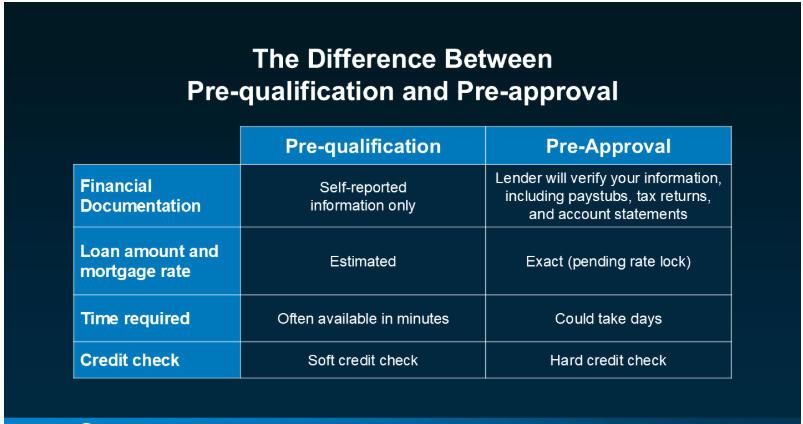
The difference between pre-qualification and pre-approval
Find Out What Your Rate Really Is
I cannot quote you a rate, and neither can any headline. What I can do is connect you with a trusted lender who will run your actual numbers and tell you what your rate really is. Start with the Lenders and Financing page, which walks through pre-approval, loan programs and the full monthly math, or reach out to me directly and I will make the introduction. The right first step is not a guess. It is a conversation with someone who can give you your number.

Written by
Sandy Margolin
REALTOR · Certified AI Agent · 36+ years in real estate · former appraiser · Nevada license S.0072707.
More about SandyWant the answer for your situation?
Articles answer the general question. The phone call answers yours, with your numbers.