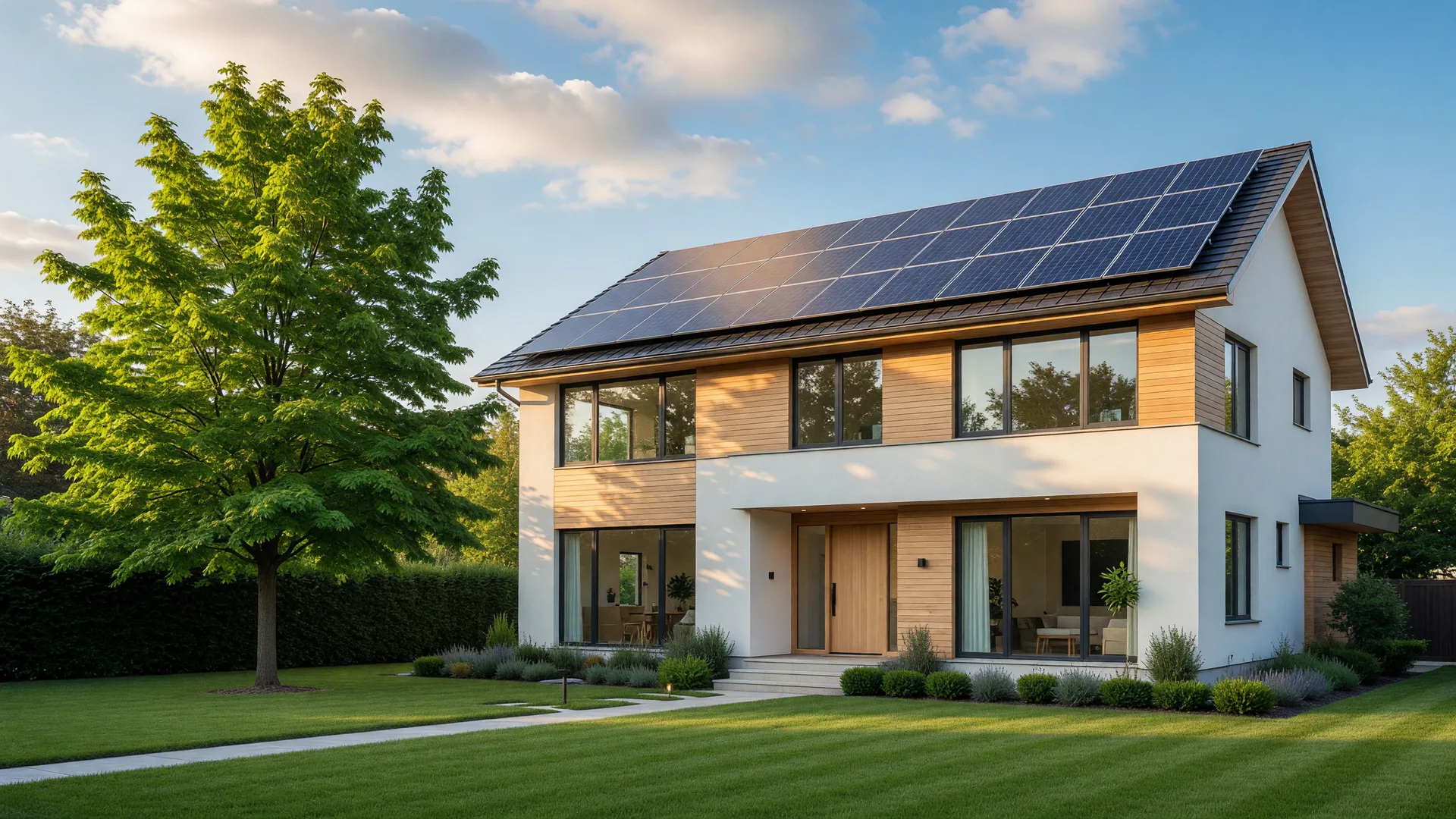
Going Green at Home in the desert
A plain-spoken guide to the features and upgrades that genuinely matter when you want a greener, more efficient home in Las Vegas: what to look for as a buyer, what to ask, and how to think honestly about both the savings and the resale value.
Greener usually just means smarter here
After more than 36 years in real estate, including my years as a licensed residential real estate appraiser, I have watched buyers get caught between two things: the home they love and the home that makes sense to run. In the Las Vegas desert, those two often come together. Because when a home is built and equipped for its climate, it tends to be more comfortable, cost less every month, and hold its value better over time.
The catch is that most homes are not all one thing or the other. A house can have efficient windows and an aging air conditioner, or water-smart landscaping and a leaky old gate. The point of this guide is not to chase perfection. It is to help you look at a home with clear eyes, know which features actually matter here, and ask the right questions before you commit.
Homes here are built for the desert, but every home is built differently. Two houses on the same street can differ a lot in how well they hold their temperature and how much water and power they use.
What actually matters in a desert
There is no such thing as a fixed list that makes every home green. But in a hot, dry climate, a handful of features do more of the work than the rest. Here is where to look first, whether you are buying or deciding what to improve in the home you already own.
Insulation and air sealing
This is the quiet worker of an efficient home. Good insulation in the attic and walls, and sealed gaps around doors, windows and ductwork, help a home hold its temperature. In a desert, that means the cooling system does not have to work as hard to keep the house comfortable.
Efficient windows
Windows are one of the biggest sources of heat gain in a desert home. Look for double-pane glass, low-e coatings that reflect heat, and frames that fit tightly. The glass and frame on a sunny side of the house matter more than some people expect.
A smart thermostat
A programmable or smart thermostat lets a home adjust its cooling around your schedule instead of running flat all day. It is one of the least expensive upgrades and one of the easiest to check on a walkthrough by asking to see the thermostat and how it is programmed.
Reflective or cool roofing
A roof that reflects heat instead of absorbing it can keep the top of the house noticeably cooler. Light-colored shingles or cool-roof coatings are common in the desert for a reason. A roof is expensive to change, so it is worth knowing what you are getting before you buy.
Water-efficient landscaping and fixtures
In Las Vegas, what happens outside matters. Drip irrigation, desert-friendly plants, efficient sprinkler systems and low-flow fixtures inside all cut water use. Water is a real monthly cost here, so a home that uses it wisely is likely to have lower water bills.
Solar
Solar makes obvious sense in a place with this much sun, and it can be genuinely valuable. But it comes with important questions: does the buyer own the system or is it leased, how old is it, is it sized to the home, and what happens to the payments if the home changes hands. Those answers matter as much as the panels themselves.
How to spot it before you buy
You cannot change everything about a home the day you buy it, and you should not try to. What you can do is look for the features that matter and ask the questions that get real answers. Here is how I walk buyers through it.
- 1
Read the age and condition of the big systems
Ask about the roof, the air conditioner, the water heater and the windows: how old they are, whether they are original, and how they have been maintained. In a desert climate, the temperature swings are hard on equipment, so age and care tell you a real story.
- 2
Walk the home with the sun in mind
Notice which rooms face west and south, where the afternoon sun hits, and whether there is shade from walls, trees or pergolas. A south-facing room with a big wall of glass and no shade is a different comfort problem than the same room with efficient windows and a covered patio.
- 3
Ask specifically about smart features
Ask whether the thermostat is programmable, whether there is drip irrigation, and whether the home has any solar or water-saving fixtures. Sellers and listing agents often mention upgrades that are expensive and easy to see, so also ask what the quieter efficiency features are.
- 4
Pull utility history when you can
Ask about typical power and water bills for the home, not a general neighborhood number. The number on a past bill reflects how that house actually performs. Just remember it also reflects how the previous family lived, so use it as a starting point, not a promise.
- 5
Use the inspection to dig in
A good home inspection looks behind the surface. Ask your inspector specifically about insulation, air sealing, the condition of the cooling system, the roof and any obvious gaps or leaks. That is the tool that turns a nice-looking home into a well-understood one.
Savings and comfort, in real terms
I am not going to hand you an invented dollar figure or a promised payback period, because nobody can honestly promise you one that fits every home. What I can tell you is how the benefit actually works, and how to get the real number for a specific house.
Here is the honest, plain-English version of why efficiency matters: an efficient home not only uses less power and water, it usually stays more comfortable. In a place where summers run hot and long, a home that cools evenly and holds its temperature well is simply more pleasant to live in. That is part of the lifestyle, not just part of the bill.
As an ongoing owner, the practical benefit is that you spend less on the things you pay for every month, while the home stays more consistent. The size of that benefit depends on the home, how it is used, how many people live there and what the weather does. There is no honest single number I can give you that applies to every house.
That is exactly why I tell clients not to guess. An energy audit, done by a qualified professional, measures how a specific home performs and points to what would help it most. A licensed contractor can quote what a specific upgrade would cost for that house. Together those two pieces give you the real picture for the home you are considering, instead of a rule of thumb.
Which upgrades add value
As someone who spent years as a licensed residential real estate appraiser, I am asked all the time whether green upgrades pay off when it is time to sell. My honest answer: some do, some are more about how you want to live, and the difference has everything to do with going in with the right expectations.
The ones that tend to hold their value
Efficient windows, good insulation and air sealing, a cool roof, and water-smart landscaping tend to be the kind of improvements a broad range of buyers value. They cost less when they are new, need less upkeep as they age, and save money every month. When market value depends on what the next buyer will pay for, broad appeal and low cost usually win.
Condition beats installed price
Here is the appraiser's honest rule: the market pays for what a home provides, not for what a previous owner paid to add it. A feature that needs repair adds little, and the most expensive personal upgrade is never automatically worth its sticker price on resale.
The ones closer to lifestyle and preference
Some efficiency upgrades are more about how you want to live than about resale dollars. Certain premium fixtures, specialty solar or battery setups, and highly personalized water or energy systems can be wonderful for you at home but harder to assign a resale number to, especially if they are unusual or hard for the next buyer to maintain.
Your own priorities are part of the math
If staying cool, using less power and having lower monthly bills are the things you care about, then efficiency is worth real weight in the decision even where a precise resale number is hard to pin down. Lifestyle value is still value; it is just a different kind.
Next resources
What to know before you sign, including the systems and features you are choosing at the factory.
Read it How Big of a Home Do You Need?Square footage and running costs go together, and size is part of the whole cost picture.
Read it Home Appraisals for BuyersWhat an appraiser actually weighs when a property is valued, and how value is really determined.
Read itLet's look at your home's real picture
Whether you are interviewing the efficiency of a home you want to buy or deciding what to improve in the one you already own, I can help you think it through. I will walk your options with you, connect you with the right professionals for an audit or a quote, and make sure the numbers make sense before you spend a dollar. Have a property in mind? Let's talk.
Licensed in Nevada · Sales Person S.0072707 · Equal Housing Opportunity
Disclaimer: By providing your information, you agree to receive communications from Sandy Margolin. Message and data rates may apply. If the property is listed with another REALTOR® or Broker, please disregard. Information deemed reliable but not guaranteed.