Las Vegas Homes for Sale: The Complete Buyer's Guide (2026 Update)
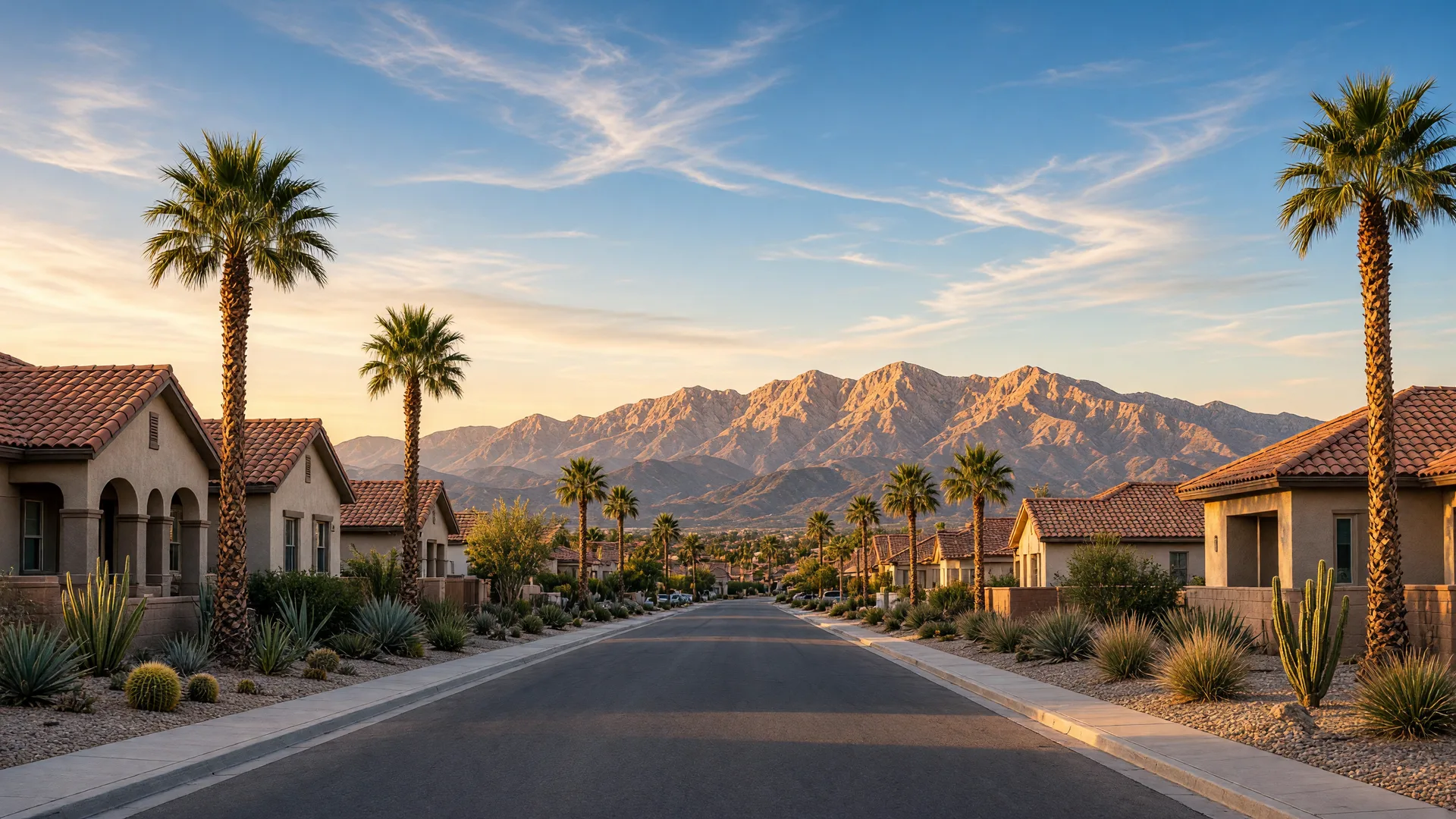
Las Vegas is a balanced market in late 2026. There are more homes for sale than buyers have seen in years, prices are holding near record levels, and mortgage rates are back above 7 percent. This guide walks through what is actually for sale, what it costs, what you need to qualify, and the honest math of buying here right now.
What the Las Vegas market looks like for buyers right now
Let us start with the number everyone asks about. In October 2026, the median price of an existing single-family home sold through the Southern Nevada MLS was $475,000, according to the Las Vegas REALTORS monthly report. That is up 0.1 percent from a year earlier and up from $470,000 in September, but still below the 2026 record of $490,000 set in May and June. The median for condos and townhomes was $279,000, down 2.1 percent from a year ago.
The bigger change is on the supply side. At the end of October there were about 8,112 single-family homes listed without an offer, up roughly 7.6 percent from a year earlier, and the sales pace equaled nearly six months of housing supply, up from just over 4.5 months a year earlier. In plain English: buyers have more choices and more time than they have had in a long while.
That is what a balanced market feels like. It is not a crash and it is not a giveaway. Prices are holding. But the frenzy is gone, and for a buyer that changes everything about how you shop, negotiate and close. If you want the deeper picture, I wrote the 2026 market forecast and a breakdown of what the price trends mean for buyers.
What 'homes for sale' actually means in Las Vegas
When people say they are looking at Las Vegas homes for sale, they usually mean the resale market on the MLS: the existing single-family homes, condos and townhomes listed by agents. That is the biggest part of the market and the part the median price describes.
But there are two other big pieces. New construction is a major part of Las Vegas, with builders selling in master-planned communities across the valley, and those homes are not always on the MLS. Off-market sales exist too, mostly pocket listings and direct deals, and they are a smaller slice that rarely makes sense for a first-time buyer.
Each route has different rules, different timelines and different leverage. I wrote a full comparison of new construction versus resale if you are weighing both.
Where the homes are, and what they cost
Las Vegas real estate is not one market, and that is the first thing to understand. The valley is really a collection of submarkets: Summerlin in the west, Henderson in the southeast, North Las Vegas, and dozens of master-planned communities in between. Two homes can share a ZIP code and sit in completely different markets.
The median tells you the middle of the whole valley, not the price of the home you want. A three-bedroom resale in a 55+ community, a new build in a master plan, and a golf-course home in Summerlin are three different markets with three different price ranges.
If you are just starting to figure out where to look, the Summerlin guide and the Henderson guide cover the two biggest pieces, and the 55+ communities hub covers the active-adult side. My typical client is buying or selling in the roughly $400,000 to $1.5 million range, with a lot of work in the luxury market above that, so I see the full spread.
What you need to qualify: income, credit and down payment
Before you look at a single home, get the numbers straight. Lenders look at three things more than anything else: your credit score, your debt-to-income ratio and your down payment. The stronger all three are, the better your rate and the more room you have.
I have written the full breakdowns separately because the details matter: how much income you need and the real cash number you need before you buy. The short version: get pre-approved before you shop, not after you find the home. Pre-approval tells you your real budget, and in a market with this much inventory it also tells sellers you are serious.
One thing I tell every buyer: the pre-approval number is a ceiling, not a target. Just because a lender will approve you for a $600,000 home does not mean the payment fits your life. Work backward from your monthly budget, not forward from the approval.
Down payment help that actually exists in Nevada
If you think you cannot buy because of the down payment, read this section before you give up. Nevada has real programs, and they are not obscure.
The Nevada Housing Division runs the Home Is Possible family of programs. The standard HIP loan offers up to 4 percent of the loan amount for first-time buyers, structured as a 0 percent interest, 30-year deferred second mortgage, with a minimum credit score around 640 and income and price caps that vary by county. For Clark County, the reported first-time buyer income caps are about $105,500 for one or two people and $121,325 for three or more, with a maximum price around $566,354.
There is also a repeat-buyer track with up to 5 percent assistance and higher limits, a veterans track with up to 5 percent, and Worker Advantage, launched in December 2025, which offers $20,000 for essential workers in healthcare, education, public safety and construction, with a six-month Nevada residency requirement.
Local options exist too, including the WISH matching grant, reported at up to roughly $30,000 through participating lenders. The catch with every program is the fine print: income caps, credit requirements, price limits and whether the seller or builder will accept the program. That is why you want a lender who actually works with these programs, not one who has to look them up.
What mortgage rates mean for your payment
Rates are the part of the math that moves. As of the week of November 12, 2026, the average 30-year fixed mortgage rate was 7.11 percent, according to Freddie Mac's weekly survey. That was down from 7.18 percent the week before and down from a peak of 7.40 percent in mid-October, the highest since November 2023. A year earlier the average was 6.24 percent.
Here is what that means in dollars. On a $475,000 home, the October median, with 20 percent down you finance $380,000. At 7.11 percent, the principal and interest payment is roughly $2,550 a month. With 10 percent down, financing $427,500, it is roughly $2,875 a month. Those are before property taxes, homeowners insurance and any HOA dues, so the real payment is higher.
Two honest notes. First, rates move weekly, so the number that matters is the one on your lock, not the one in this article. Second, a rate in the 7s changes the buy-versus-rent math, and I covered that separately in Is Renting Cheaper Than Buying in Las Vegas?.
The offer process in a balanced market
Here is where the market shift helps you. With nearly six months of supply, you are not competing against twenty offers on a Thursday night. You have time to compare homes, negotiate and keep your contingencies.
A normal offer in this market includes a financing contingency, an appraisal contingency and an inspection contingency. In a hot market buyers waive those to win. In this market you usually do not have to, and you should not unless there is a specific reason.
The negotiation levers in a balanced market are seller concessions: closing cost credits, rate buydowns, repair credits after inspection. Sellers who want to move are often willing to pay points to buy your rate down or credit your closing costs, and that can be worth more to you than a slightly lower price.
The other side of the coin: well-priced homes in the best communities still sell quickly. A balanced market does not mean every listing is a bargain. It means the homes that are priced right and show well move, and the rest sit.
Closing costs and the real cash number
The down payment is not the only cash you need at closing. You will also pay lender fees, title and escrow charges, recording fees, prorated property taxes and, in many Las Vegas communities, HOA transfer fees and a capital contribution. The exact total depends on your loan, your price and your community, which is why I always tell buyers to get a good-faith breakdown from their lender early.
I built a whole article around the real cash number you need before you buy because this is where buyers get surprised. The short version: budget for closing costs on top of your down payment, and ask for seller concessions if your cash is tight. In this market, concessions are a normal part of the conversation, not a favor.
Property taxes: the 3 percent cap you have to claim
Nevada is a no-income-tax state, and property taxes are a big part of how the state funds itself. For owner-occupied primary residences, Nevada law caps the annual increase in your property tax bill at 3 percent under NRS 361.4723. That is a real benefit, and it is not automatic.
Here is the part buyers miss: when you buy a home, the previous owner's abatement ends, and you have to file a claim with the county assessor to get the 3 percent cap on your own primary residence. Until you file, the parcel falls under the general cap of up to 8 percent. Clark County mails a tax cap notice to buyers after a change in ownership, and the response has a deadline, so do not let it sit in a pile.
New construction is different for the first year: a brand-new home or a change of use is taxed at full assessed value in its first fiscal year, then the cap applies once you claim it. It is a small piece of paperwork with a real dollar value, and it is the kind of detail a good agent reminds you about.
Mistakes I watch buyers make
After 36 years in this business, the mistakes are remarkably consistent. Here are the ones that cost the most:
The ones that cost the most
- Shopping by price per square foot instead of by comparable sales. Price per square foot is a starting point, not a value.
- Skipping the pre-approval and falling in love with a home they cannot buy.
- Waiving the inspection to win a bidding war that does not exist in this market.
- Ignoring the HOA: the resale package, the budget, the reserves and the rules, not just the monthly dues.
- Buying the house without understanding the neighborhood: the schools, the commute, the noise and the resale pool.
- Waiting for the perfect home instead of making a smart offer on a good one.
The honest answer: is now the time?
The question I hear more than any other is whether this is a good time to buy. My honest answer is usually the same: for most people the question is not timing the market, it is whether the numbers work for your life. Prices are holding near records, rates are in the 7s, and inventory is the best it has been in years. That combination is not a bad one for a buyer who is ready.
I have written the full versions of this argument in Should You Buy a Home in Las Vegas Now or Wait? and Is Buying a Home in Las Vegas in 2026 a Mistake?. The short version: if you can afford the payment, plan to stay a reasonable number of years, and the home fits your life, the market is not the enemy. If you are buying because you feel pressure, that is the wrong reason.
Your next step
Buying a home in Las Vegas comes down to three things done in order: get your numbers straight, get pre-approved, and get a clear picture of the communities that fit your life. Everything after that is process, and process is the easy part when the foundation is solid.
That is where I come in. I have been doing this for more than 36 years, and my job is to educate you first and help you make a decision based on evidence, not pressure. If you want to know what your budget actually buys in this market, or where the homes for sale fit your life, send me a message or call 702-683-3362. The first conversation is free, and it is the most honest one you will have all week.
A note on the numbers
Attribution: median prices, single-family inventory and months of supply from the Las Vegas REALTORS monthly housing statistics for October 2026, as reported in early November 2026; the 30-year fixed mortgage rate from Freddie Mac's Primary Mortgage Survey for the week of November 12, 2026; down payment assistance program details from the Nevada Housing Division's published Home Is Possible program materials; and the property tax abatement under NRS 361.4723 as described by the Clark County Assessor's office.
Program limits, rates and market conditions move, so work from current, local data for your specific situation. That is exactly what a conversation covers: your numbers, your target communities, and what the latest local evidence says about your purchase.

Written by
Sandy Margolin
REALTOR · Certified AI Agent · 36+ years in Las Vegas real estate · former licensed residential appraiser.
More about SandyKeep reading
What Is a Market Value Cash Offer? The Honest Breakdown
A market value cash offer sounds like the best of both worlds: cash speed and full price. The honest version is more interesting. The price is real, and the fee is the price of the certainty. Here is how these offers work and how to tell a good one from a marketing phrase.
9 min read · Keep readingThe Walk-Away Number: What You'll Actually Take Home After Selling in Las Vegas
Your home may be worth $700,000. That figure gets all the attention. The number that matters most is what lands in your pocket after the loan is paid off and the costs of selling come out. Here is how to find that number.
6 min read · Keep readingWant the answer for your situation?
Articles answer the general question. The phone call answers yours, with your numbers.